
L'Eglise des Saintes Maries de la Mer connaît plusieurs fois par an des heures de ferveur intense à l'occasion des Pèlerinages. Roms, Manouches, Tsiganes et Gitans arrivent des quatre coins d’Europe et même d’autres continents pour vénérer leur Sainte, Sara la Noire. Ils s’installent dans les rues, sur les places, au bord de la mer. Pendant huit à dix jours, ils sont ici chez eux.
Le pèlerinage est aussi l’occasion de retrouvailles et la plupart des enfants sont baptisés dans l’église des Saintes.
- Les 24 & 25 Mai (Procession à la mer de Sara le 24, Procession des Saintes Maries Jacobé et Salomé le 25).
- Le Dimanche le plus proche du 22 Octobre (Procession à la mer des Saintes Maries Jacobé et Salomé).
Ces fêtes remontent au Moyen Age et leur cérémonial est toujours le même, la foule, cierges en main, chante et acclame chaque année les Saintes Maries.
Le 24 Mai
On mène en Procession à la mer, Sara, la Patronne des Gitans. Avant cette manifestation, à l'intérieur de l'Eglise, les Châsses contenant les reliques, ont été lentement descendues de la "Chapelle Haute" au moyen d'un treuil au milieu des chants et des acclamations. La statue de Sara, portée par les Gitans, jusqu'à la mer, symbolise l'attente et l'accueil des Saintes Maries Jacobé et Salomé.
Le cortège de ce jour, en l'honneur de Sara et des Gitans, est d'institution récente. En 1935, le Marquis de Baroncelli et quelques Gardians de Camargue, soucieux de donner aux Gitans dans le Pèlerinage une place qu'ils n'avaient pas (ils n'étaient encore à cette époque que quelques centaines, perdus dans la grande foule des pèlerins de Provence et du Languedoc), obtinrent d'organiser avec les Gitans de la région cette marche vers la mer en souvenir de l'arrivée de "leur Sainte".
Le 25 Mai
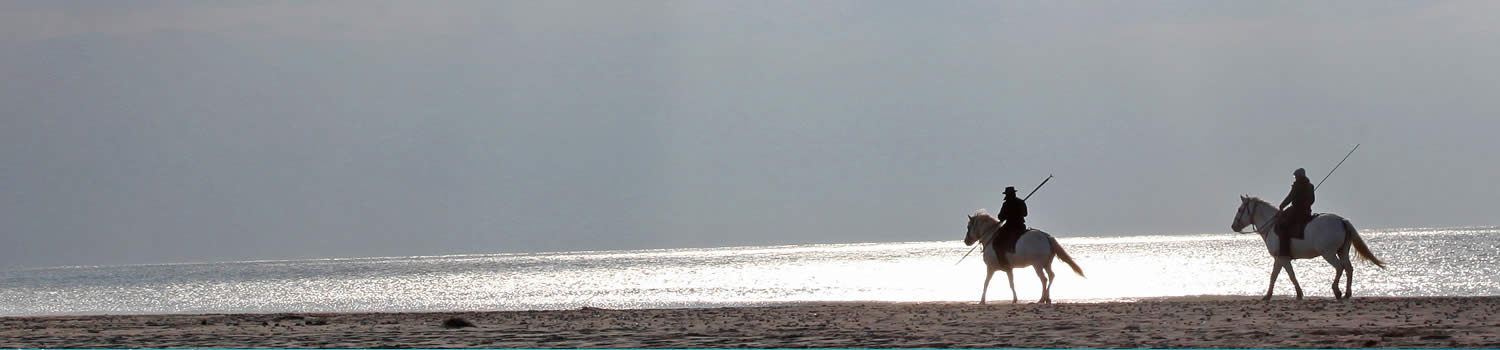
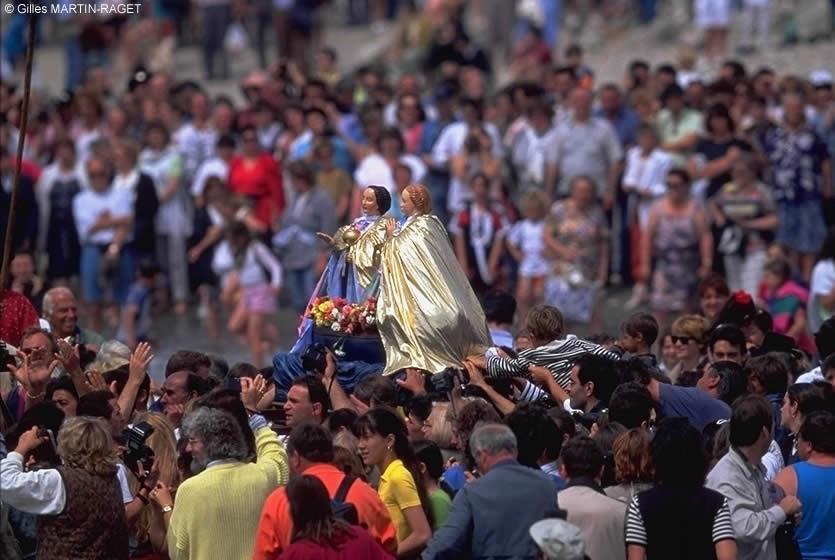
Après la messe solennelle du matin, la "barque", avec à bord les statues des deux Maries, est portée à la mer, accompagnée par la foule de pèlerins Gitans et non-Gitans, par les Gardians à cheval et les Arlésiennes en costume. Les porteurs avancent en mer, pour bien symboliser l'arrivée des Saintes Maries Jacobé, Salomé et de la Foi, par la mer. L'Evêque, à bord d'une barque traditionnelle de pêcheurs, bénit la mer, le pays, les pèlerins et les Gitans. La Procession revient alors vers l'Eglise dans la joie et les acclamations, accompagnée des instruments de musique et du carillon des cloches. L'après-midi, dans la prière et la ferveur populaire, se déroule à l'Eglise la cérémonie de la remontée des Châsses à la "Chapelle Haute".
Durant les deux jours, offices et veillées se succèdent dans l'Eglise.
Pelerinage Gitan aux Saintes-Maries-de-la-Mer
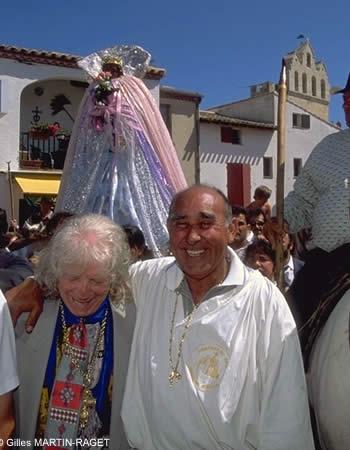
Huit ou dix mille gens du voyage ont envahi le bourg camarguais. Observons que leurs caravanes ne sont pas disposées au hasard. Cette cité éphémère a ses avenues, ses venelles, mais aussi " ses quartiers " dont tous les occupants ont comme un air de famille. C'est que le peuple Gitan n'est pas " Un " mais divers. Essayons de nous y reconnaître.
Les Gitans
Si le nom de " Gitan " est donné chez nous à l'ensemble des populations d'origine tsigane, il n'appartient légitimement qu'à un seul groupe, de loin le plus nombreux et le plus implanté aux Saintes Maries de la Mer. L'Espagne fut longtemps leur pays de prédilection : leurs noms de famille en gardent la trace, comme leur dialecte : le "kâlo", malheureusement en voie de disparition... Les femmes sont très brunes, les hommes ont le teint bazané. Ils se disent soit "Catalans", soit "Andalous", suivant le lieu de leur principal établissement. On les trouve par dizaines de milliers dans le Midi de la France, où certains sont sédentarisés depuis plusieurs années, voire depuis plusieurs générations. Mais il y a aussi des bidonvilles Gitans, dont la population a décuplé avec l'arrivée de nombreux Gitans établis en Afrique du Nord.
Ce sont les Gitans qui ont donné à l'Espagne le meilleur de l'Art Flamenco, mais aussi des danseurs célèbres (Luisillo, Imperio Argentina, Carmen Amaya, Lola Florès et La Chunga), ainsi que des générations de grands toreros. Et à la France un guitariste inspiré : Manitas de Plata.
Les Roms
Ce sont les plus aisément reconnaissables, car leurs femmes continuent à porter les traditionnelles jupes multicolores qui leur tombent jusqu'aux pieds, et, quand elles sont mariées, un foulard noué sur la tête. Les plus riches arborent des colliers de pièces d'or, qui constituent le trésor de la tribu. Beaucoup disent la " bonne aventure ", tandis que les hommes sont rétameurs, chaudronniers ou doreurs. Ces professions les incitent à résider dans les banlieues industrielles, notamment à Paris, Lyon et Lille. C'est le groupe qui a le plus jalousement préservé son originalité : sa langue (proche du sanskrit), ses traditions, ses légendes. Après avoir traversé l'Europe Centrale, les Roms se sont aujourd'hui répandus dans le monde entier, du Canada à l'Australie et à l'Afrique du Sud.
Les Manouches
Les Manouches (et leurs cousins, les Sinti), ne se distinguent guère. Les plus pauvres sont vanniers, et ont conservé les roulottes à chevaux ; les autres sont marchands forains ou récupérateurs de ferraille. Les Manouches ont longtemps séjourné en Allemagne et portent des noms germaniques (ex: Django Rheinardt) ; les Sinti conservent la marque de leur passage dans le Piémont (ex : la famille Bouglione). Tous ont une véritable passion pour la musique, et c'est parmi eux que se recrutent les virtuoses des célèbres orchestres "tsiganes ".
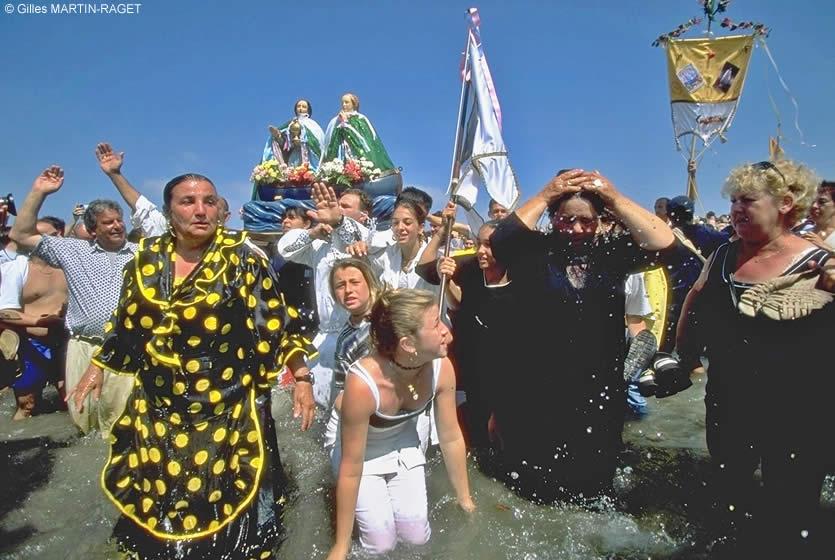
Ferveur gitane - Pélerinage des Saintes Maries
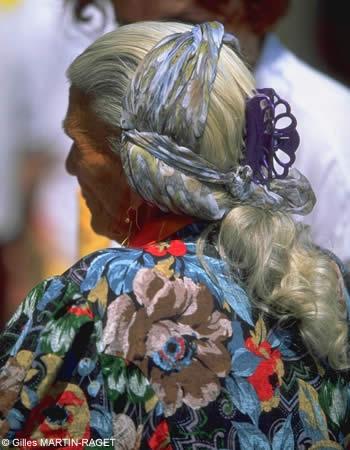
C'est en ces termes que le Pape Paul VI accueillit, en 1965, les Gitans venus de toute l'Europe et au milieu desquels il voulut célébrer son 68ème anniversaire.
Nul vocable ne saurait mieux leur convenir. Déjà quand, à l'aube du XVème siècle, leurs ancêtres arrivèrent en France, ils se présentèrent comme des pénitents, condamnés à errer de par le monde en expiation de leurs péchés. Ils montraient, à l'appui de leur dire, des lettres du Pape Martin V. Pendant tout le Moyen Age, ils demeurèrent fidèles au célèbre Pèlerinage de Saint Jacques de Compostelle.
De nos jours, plus que jamais, le Pèlerinage, si bien adapté à leur nomadisme inné, reste l'acte religieux essentiel des Gitans. Le mauvais accueil qui leur est parfois réservé dans d'autres églises, où ils se sentent étrangers, les incite davantage encore à se retrouver entre voyageurs pour prier à leur manière et accomplir quelques vœux. Est-il dans la détresse, a-t-il un des siens malades, le Gitan fait un vœu à un Saint. Si c'est le Pèlerinage des Saintes Maries de la Mer, il s'engage à l'accomplir dans de pénibles conditions de pénitence.
Qui n'a pas assisté aux veillées gitanes dans la vieille Eglise forteresse embrasée de cierges, ne saura jamais rien de la vraie ferveur gitane. La foule arrive, certains soirs, précédée par les violons et les guitares. On allume une multitude de petits cierges que chacun tient élevés vers la nef. On prie très fort, on clame des invocations, on présente les enfants à bout de bras devant les statues... Le Pèlerinage de mai permet d’intensifier, pendant plusieurs jours, l’évangélisation des enfants et des familles par les points d’aumônerie, et des conversions intérieures se réalisent dans le secret des cœurs. De nombreux Gitans profitent aussi de ce rassemblement familial pour faire baptiser leurs enfants, dans l'Eglise des Saintes Maries de la Mer.
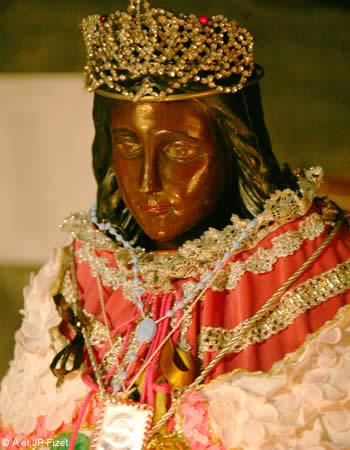
Si le temps n'est plus quand les Gitans, venus par train ou parfois à pied, passaient la nuit dans la crypte de Sara, c'est toujours pour "leur Patronne" qu'ils viennent dans l'antique sanctuaire camarguais. Certes, Marie-Jacobé et Marie-Salomé tiennent aussi une place dans leurs cœurs. Ils les acclament lors de la descente des Châsses et ne manquent pas de hisser jusqu'à leurs statues les enfants qui posent sur elles leurs mains et leurs lèvres. Mais c'est Sara qui est "leur Sainte à eux". Chacun ajoute un cierge à la blanche forêt ardente qui répand dans la crypte une chaleur d'étuve. On glisse, dans la boîte réservée aux intentions, des linges d'enfants, d'humbles bijoux, de naïfs messages. Et puis Sara est habillée de neuf. Quarante, cinquante manteaux s'amoncellent sur la frêle statue qui grossit de jour en jour, et dont le fin visage pâlit sous les attouchements implorants et fervents.
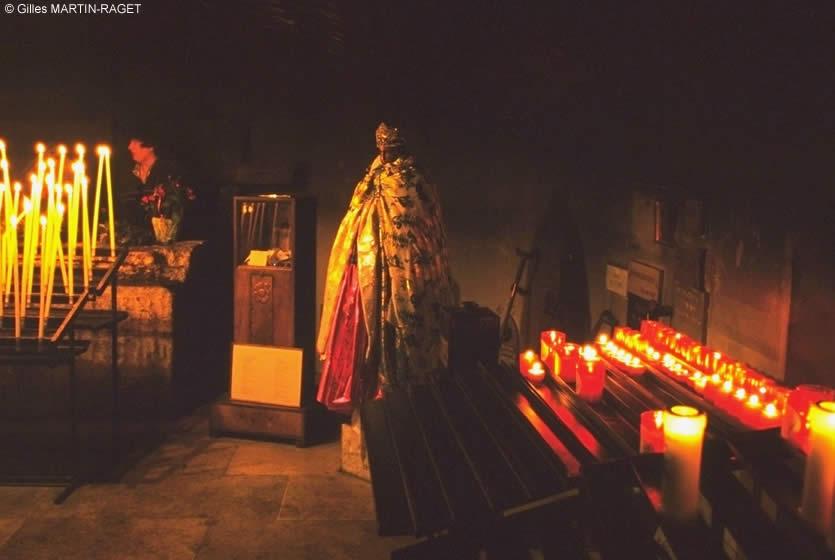
Statue de Sara - Eglise des Saintes Maries de la Mer
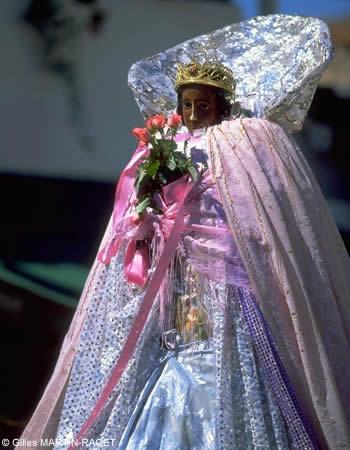
La statue de Sara, Patronne des Gitans, se trouve dans l'Eglise des Saintes Maries de la Mer, à droite au fond de la crypte, revêtue de robes multicolores et de bijoux. L'autel central supporte un reliquaire, et contre le mur se trouve la croix de Procession, portée par les Gitans. Il faut voir cette crypte au moment du Pèlerinage de Mai, envahie par la foule des Gitans, illuminée de mille cierges que la chaleur recourbe comme des serpents.
Connue dans le monde entier comme la "Patronne" des Gitans, Sara pose à l'historiographe une énigme que ne semble pas prête d'être résolue. Une tradition camarguaise y voit la servante des Saintes Maries Jacobé et Salomé en Palestine, et leur compagne sur les bords du Rhône. Une autre tradition, attribuée aux Gitans, y voit une Gitane qui fut installée sur les rives provençales et qui, la première, accueillit ici même les exilés de Terre Sainte. Mais quel fondement à cette tradition quand l’Histoire ne mentionne la venue des gitans en France et en Provence qu’à partir du XVème siècle ?
Si d'autres versions ont été également proposées, en vérité, nul ne sait qui est Sara, ni comment son culte s'instaura aux Saintes Maries de la Mer, où l'on venait la prier de très loin bien avant la Révolution. Pour les Gitans, qui se reconnurent en elle et l'adoptèrent comme protectrice attitrée, elle est "Sara-la-Kâli", un mot tsigane qui signifie à la fois "gitane" et "noire".
La première mention de Sara se trouve dans un texte de Vincent Philippon rédigé vers 1521 : "La Légende des Saintes Maries" et dont le manuscrit est à la bibliothèque d'Arles (13). On l'y voit quêtant à travers la Camargue pour subvenir aux besoins de la petite communauté chrétienne. Cette pratique de la "chine" aurait pu, pensent certains auteurs, la faire assimiler par la suite à une Gitane.
Les Gitans, eux, ne se posent pas tant de questions. Et ils suivent par milliers, l'étonnante Procession qui, le 24 Mai, après la descente des Châsses, conduit "leur Patronne" de l'Eglise à la mer ; étrange cohorte en vérité, peuple en marche, cohue débordant des rues étroites que les Gardians à cheval ont du mal à canaliser, houle de têtes et de visages au-dessus de laquelle oscille la frêle statue portée à bras d'hommes. Les Arlésiennes lui font bien aussi une escorte d'honneur ; mais ce sont les Gitans qui lancent inlassablement, sur des kilomètres, cantiques et cris, mille fois répétés : "Vive Sainte Sara". Folklore si l'on veut, mais folklore inoubliable. On a trop dit de Sara qu'elle avait des allures d'idole Païenne. C'est oublier que cette foule, à sa manière, prie. Ce n'est pas vouloir comprendre que ce peuple derrière elle, en marchant vers la mer, marche aussi vers Dieu.
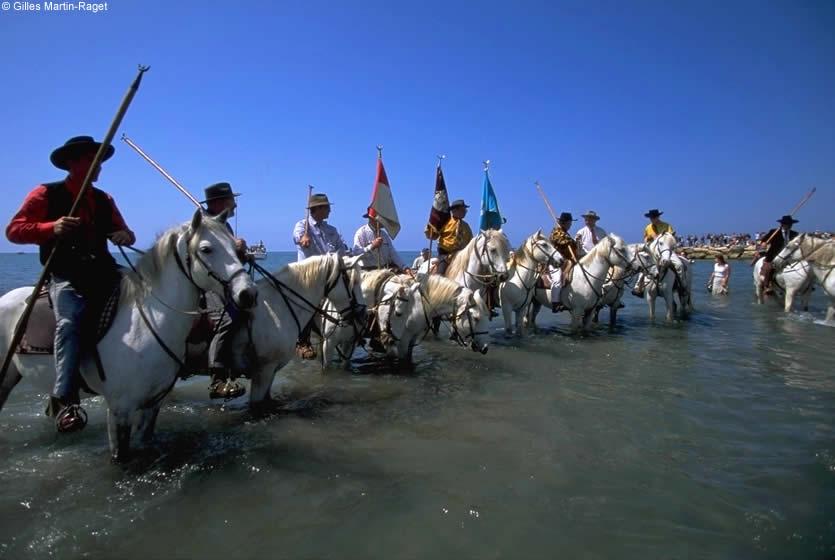
Pélerinage gitan des Saintes Maries de la Mer - Gardians
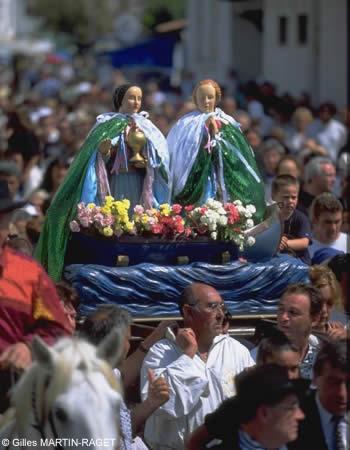
Par quel mystère ces deux Saintes se trouvent-elles sur le rivage méditerranéen ?
Le Bréviaire du Diocèse d'Aix en Provence nous renseigne :
"Chassés par la persécution de Palestine, de nombreux disciples du Christ ont été exilés et ont porté la Foi chrétienne dans notre région."
Avec Marie-Madeleine, Lazare, Maximin et beaucoup d'autres, Marie-Jacobé et Marie-Salomé furent donc arrêtées et embarquées sur un navire, puis, à proximité des côtes, abandonnées sur un rafiot sans voile ni rames. Guidées par la Providence elles abordèrent le rivage provençal.
Et tandis que les disciples partaient évangéliser au loin, les Saintes Maries Jacobé et Salomé, femmes d'âge puisque mères d'Apôtres, demeuraient sur ce rivage qui porte désormais leur nom. Elles auraient évangélisé les gens du pays et les Romains qui occupaient la région.
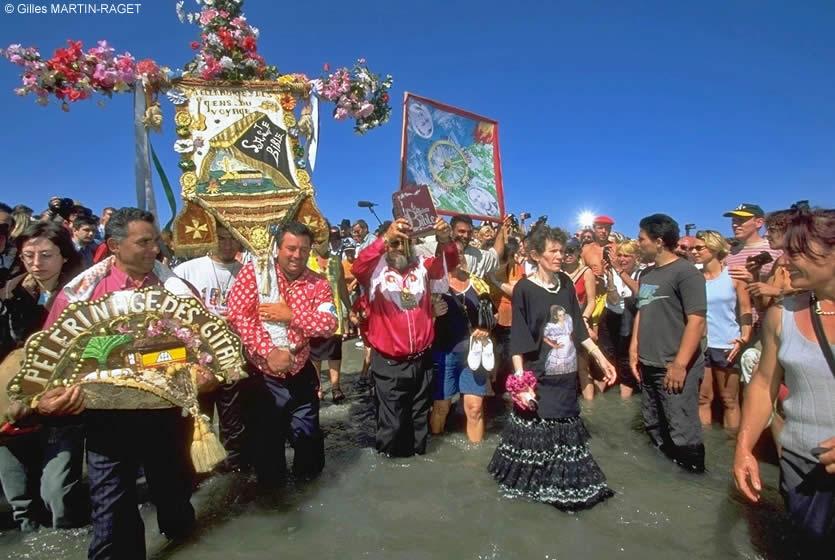
Gitans en procession aux Saintes Maries de la Mer
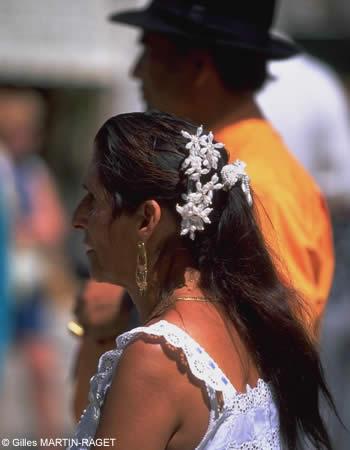
Au soir du 25 Mai, la belle fête est terminée. Déjà les caravanes s'éloignent sur les chemins. Par quels chemins ? Pour les nomades, c'est celui de la mésaventure quotidienne. Ils n'ont pas au monde un seul pied carré dont ils puissent dire " Je suis chez moi ! ". A aucun moment dans leur existence, ils ne savent de qui demain sera fait.
Expliquer les raisons de leur étrange existence, ils le voudraient bien, mais comment ? Leur seule certitude est qu'ils continuent à appartenir à un autre monde que le nôtre. Ni les lois, ni le service militaire, ni les allocations familiales ne changeront rien à cette évidence que renforce la suspicion sourde qui les entoure et dans laquelle on entrevoit une certaine forme de racisme.
Qui n'a entendu dire " Pourquoi ne retournent-ils pas chez eux ? ". La réponse est aisée : " chez eux ", mais c'est ici puisque 95 % de nos Gitans sont citoyens français, que beaucoup d'entre eux se sont illustrés sur nos champs de bataille et dans la Résistance. Sait-on que 300 000 de leurs frères ont péri dans les camps de mort nazis?
Quant à vivre " comme tout le monde ", leur condition le leur interdit. Et puis au nom de quelle orgueilleuse supériorité voudrions-nous que notre façon de vivre fût la seule légitime ; il y a des pigeons de ferme et des pigeons voyageurs ; il y a des sédentaires et des nomades ; voilà tout.
Alors, amis visiteurs, vous qui trouverez sympathiques les Gitans quand ils sortent en longue Procession ou s'enivrent de musique et de danse aux Saintes Maries de la Mer, de quel regard les verrez-vous le jour où ils arriveront dans vos villes et vos villages ? Leur ouvrirez-vous votre porte ? Ferez-vous l'aumône d'un sourire et d'un peu d'amitié à la Gitane qui vous proposera sa vannerie, son linge de maison ou sa petite mercerie ? L'aiderez-vous à stationner le temps d'une bonne halte ailleurs que sur les décharges publiques ? Si vous le faites, vous serez en bonne compagnie.
Au terme d'une longue histoire, les Gitans comptent aujourd'hui beaucoup d'amis ; à l'image de Jacques Callot, qui suivit une troupe de bohémiens et les immortalisa dans ses gravures, et de Stradivarius, qui apprit à leur école l'art de la lutherie. Contre les préjugés, les fausses légendes, le mépris de tant de sédentaires, ils ont tissé à travers toute la France le grand filet de l'amitié gitane. Ils se sentent frères et soeurs de ce peuple méconnu qui a payé si cher et si longtemps le droit de continuer d'exister.
Laissez donc agir en vous-même la grâce des Saintes Maries de la Mer, où les pauvres sont honorés, les rejetés accueillis, les mal-aimés réconfortés. Passé le temps d'un Pèlerinage ou d'une trop courte visite, nous voudrions que vous deveniez de ceux pour qui l'arrivée des roulottes est une promesse de joie. Ainsi s'exprime en sa naïveté la belle prière du peuple Rom :
Sainte Sara, mets-nous sur la bonne route, donne-nous ta belle chance et donne-nous la santé. Et quiconque pense du mal de nous, change son coeur pour qu'il en pense du bien.
-Amen.-
Office de Tourisme Les Saintes Maries de la Mer - 5 avenue Van Gogh - BP 73 - 13732 Les Saintes Maries de la Mer
+ 33 (0)4 90 97 82 55
http://www.saintesmaries.com/Art de vivre
Recettes provençales, marchés de provence, traditions de Noel, savoir-faire...