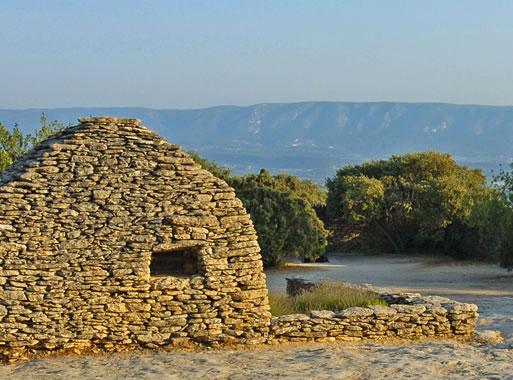
Nestled on a low mountain in the Vaucluse, a cable's length from the village of Gordes, the Bories village, classed as a historic monument, gives a priceless account of the way of life in Provence, from far-off times to the present day.
An architectural masterpiece
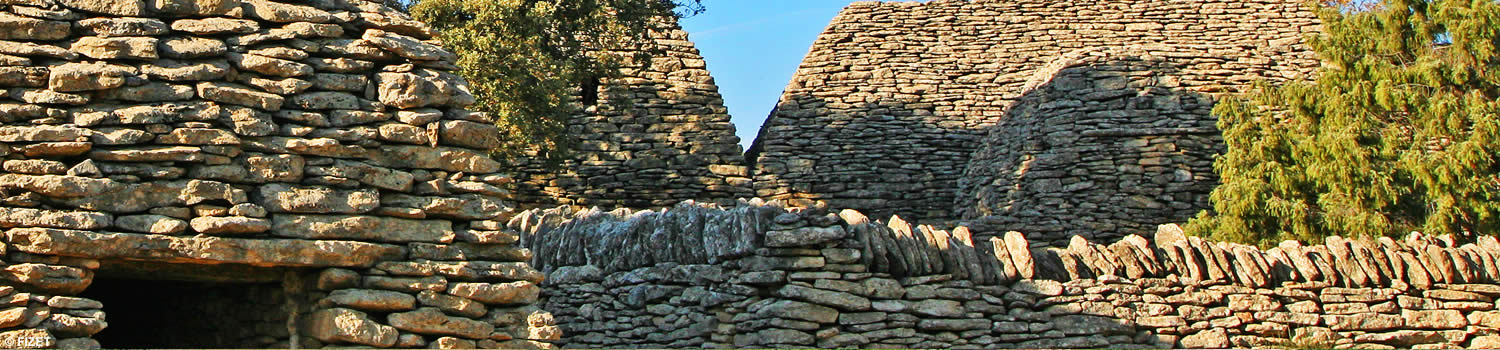
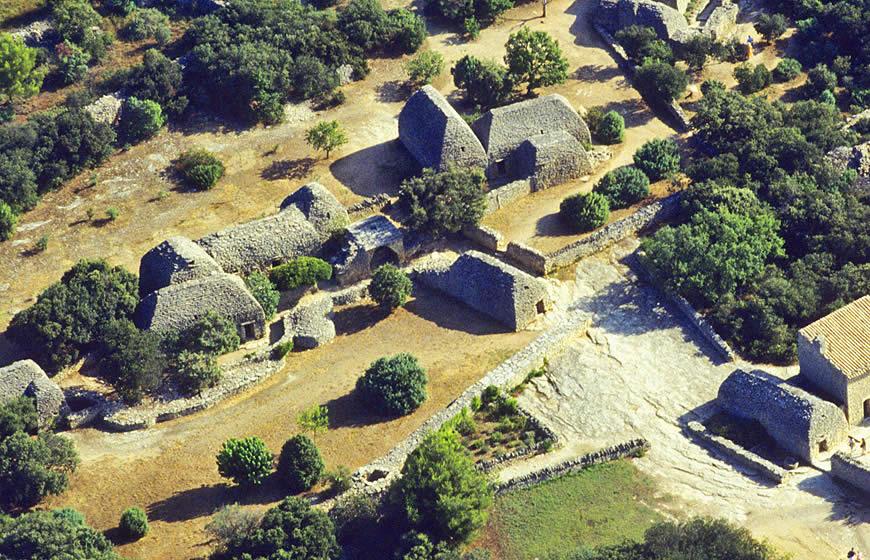
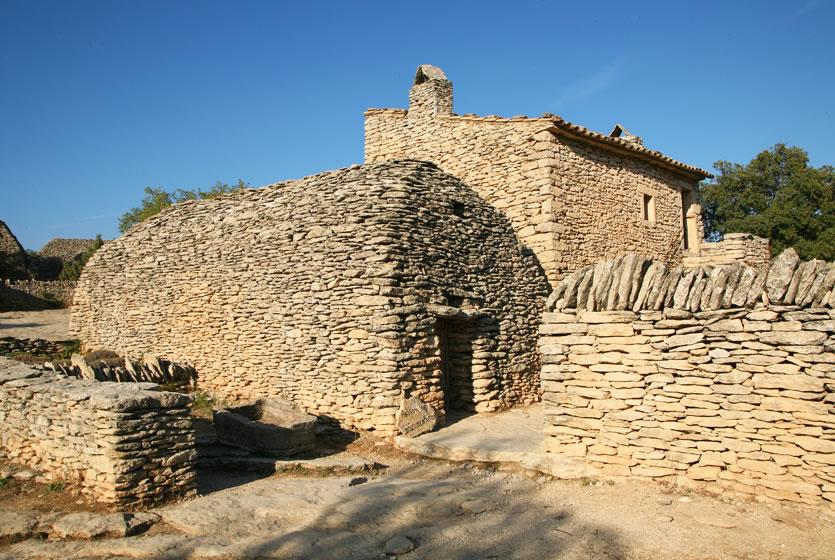
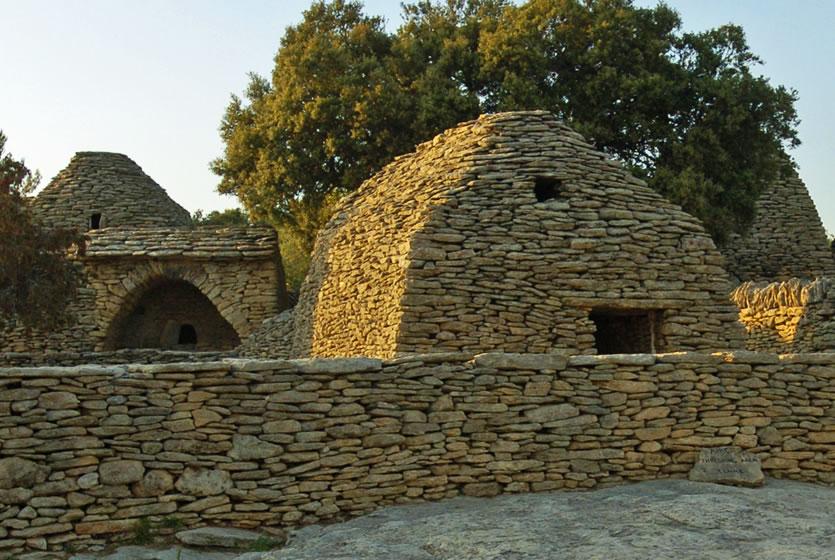
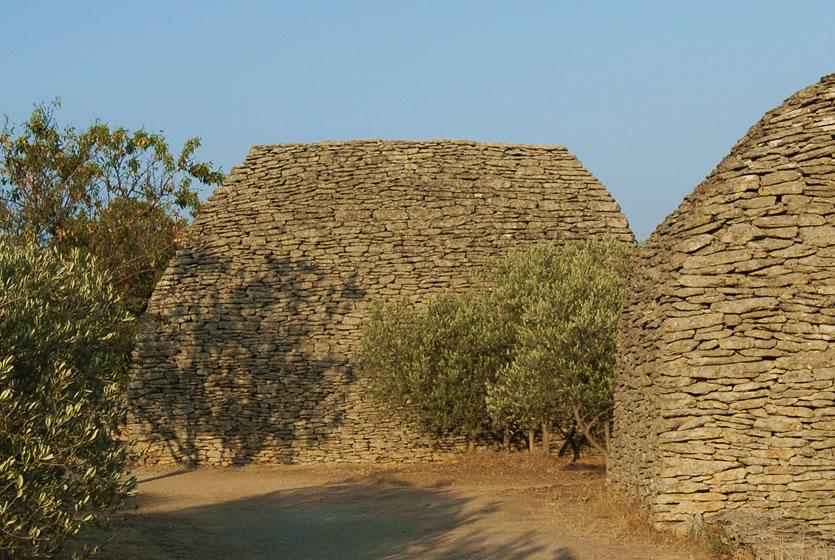
In a twist in one of the paths that leads through the scrub, scantly shaded by the holm oaks, the visitor comes across a group of thirty dry stone huts, now revived and restored following ten years of work. These characteristic constructions in their pure and simple shapes represent an architectural masterpiece. The stones, without use of mortar, have been skillfully stacked into huts with corbelled vault ceilings, huts which reflect the harmony of natural materials, from which emanate an austere quality, and at the same time, a gentleness caressed by the stunning light of Provence.
The word "Borie", of Provençal origin, comes from the Latin "boaria" - oxen stable -, signifying a type of shed. The hut has always been an institution in Provence. First popping up in fields to house the peasants' tools, it became, as time passed, the little country house, done up, often in quite a rudimentary manner, to spend Sundays and holidays. The borie also permetted shepherds to shelter their flocks. To build them, our ancestors gathered the stones from the calcareous surroundings. They were just lying there for the taking.
The houses in the village
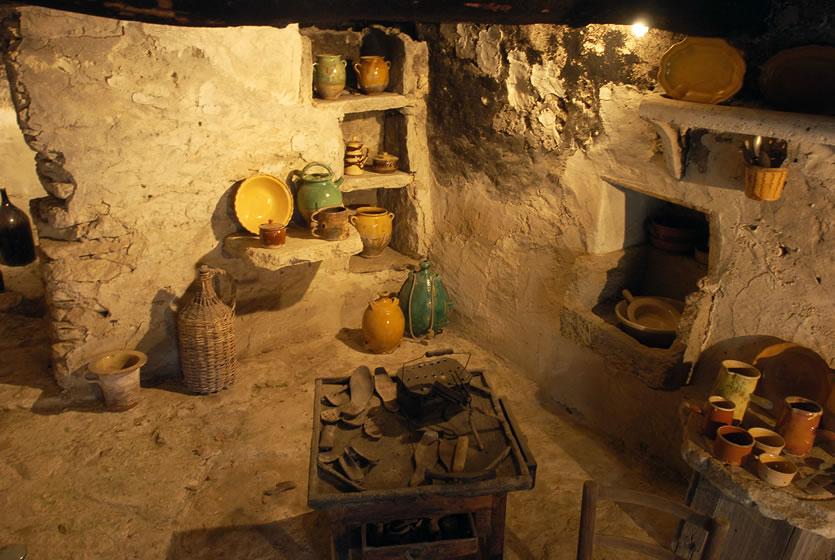
The Bories village, a very unique village, is composed of seven groupings of huts, each having a very precise function. You will find houses, stables, sheepfolds, barns, grain lofts, silkworm factories and bakehouses, vat houses and tanning mills, henhouses, pig sties and goat shelters. The existence of this village shows that, outside of just a sporadic use of a borie, as a temporary dwilling, for example, or for agricultural purposes, there was a whole social and economic system built around and based on these dwellings of former times.
Preservation of the Bories
The Bories village constitutes the largest group of such huts found in the region of Apt, in the Luberon. Revived and retored thanks to the hard work of the land's owner, it is, since 1977, classed as a historic monument. It need ten years of effort to give a facelift to this site abandonned, for over a century, to the vegtation. Protected, but open to the public as well as the ethnologist, it gives you the opportunity to understand the extraordinary composition of this Provençal native architecture of which the essence itself lies in the mastery of the use of dry stone in construction, generously provided by a dry and calcareous nature. In Provence, we still gather stones from the field and scrubland to build walls and sheds, to support terraced land.
The origin of the Bories
Attempts at dating the bories have been made. What we do know is that the origin of bories goes as far back as the Bronze Age. As to this village itself, many theories have been put forward to determine its age. According to some, it would have been constructed after the fall of Apta Julia around the 7th century. For others, with regard to the objects and money found on the site, it could not been built prior to the 15th century. Other remains, such as the pottery, date from the 18th century. It is possible that the spot was inhabited and refurbished several times. One thing is certain, the most recent constructions date from the 19th century. Today presented as a museum, the village brings together an exhibition of traditional objects and tools, as well as presenting the historie of the Bories and of dry stone architecture in France and in the world.
© text: Sandrine Moirenc
Village des Bories - Les Savournins - 84220 Gordes
+ (33) 04 90 72 03 48
http://levillagedesbories.com/Where to sleep?