
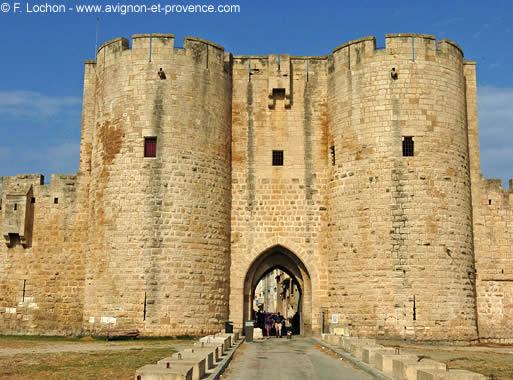
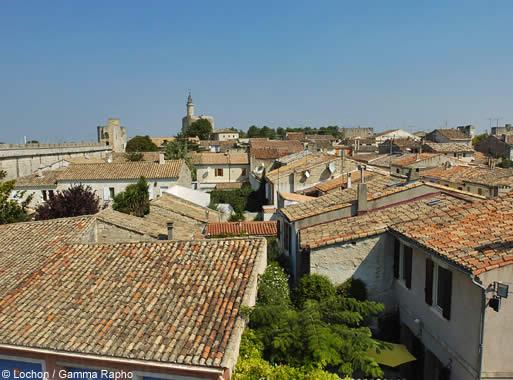
Située à 6km de la mer, Aigues-Mortes, ville médiévale fortifiée, affiche un prestigieux patrimoine au coeur d'un des plus beaux sites naturels de la Provence, la Camargue.
A l'origine, Aigues-Mortes était un petit hameau de pêcheurs et de ramasseurs de sel, installés au fond d'un golfe ensablé et marécageux, entouré d'étangs jusqu'à la mer Méditerranée et baigné par un climat paludéen. L’histoire l’a ceinte de remparts impressionnants, quadrilatère de 1640 mètres flanqué de cinq tours admirables, dont la fameuse Tour Constance, et de dix portes préservant un patrimoine religieux incroyable.
Ville marquée successivement par l'empreinte des croisades et des templiers, puis par les guerres de religion, c'est aujourd'hui une ville touristique bien agréable, fière de son histoire et de ses terres sauvages. Il fait bon flâner dans la vieille ville à la découverte de son passé, sa culture taurine, sa gastronomie, son vin, et sa situation privilégiée en Camargue. Tous les ans au mois d'août, pendant la fête de la Saint-Louis, le coeur d'Aigues-Mortes bat à l'heure médiévale avec des défilés, spectacles, marché...
Son petit port de plaisance en fait une escale pittoresque, relié à la mer par le Grau du Roi, et à Sète par le canal du Rhône.
N’oublions pas, au sud de la ville, les vastes terres inondées qui abritent une faune et une flore exceptionnelles ainsi que l'or blanc des mers, principale ressource économique d’Aigues-Mortes : le sel. La zone de production de sel des des Salins du Midi est ouverte au public, l'occasion de découvrir le travail des hommes mais aussi des milliers d'oiseaux dans un cadre exceptionnel, sur 9000 hectares.
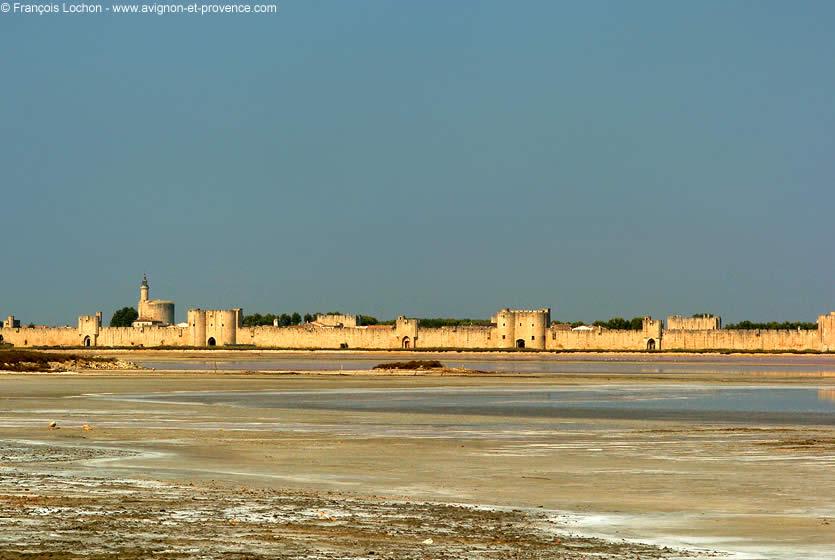
La Citadelle d'Aigues-Mortes en Camargue
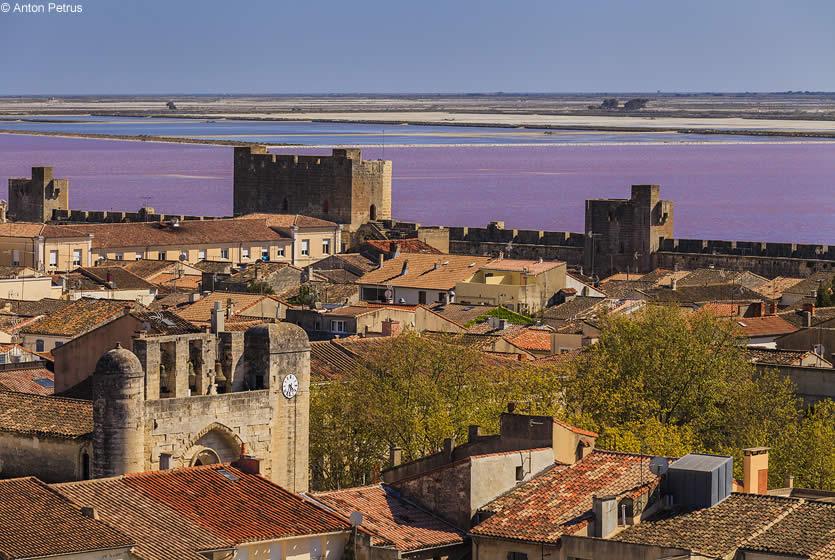
Ville médiévale d'Aigues-Mortes et marais salants
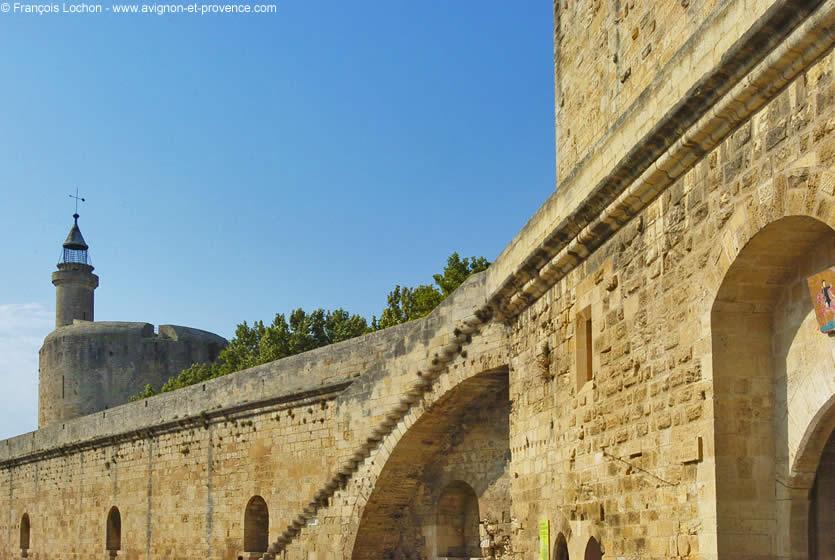
Remparts d'Aigues Mortes et Tour Constance
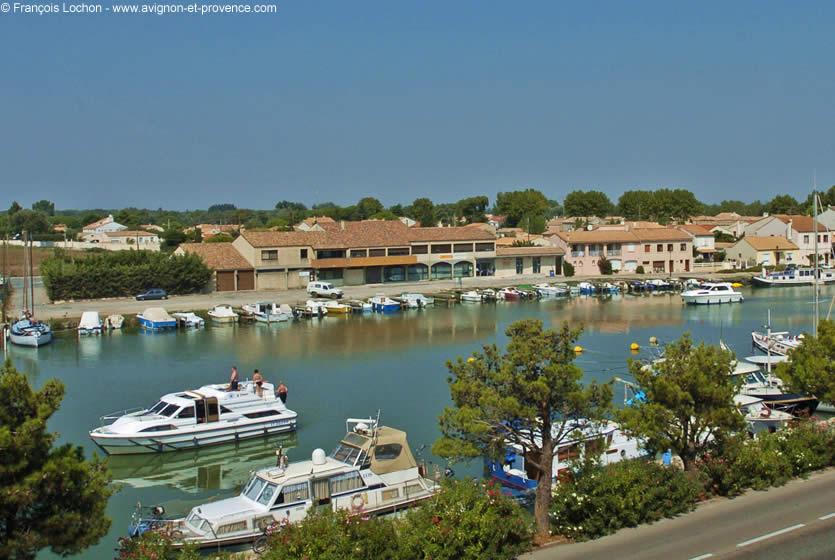
Le port de plaisance d'Aigues-Mortes
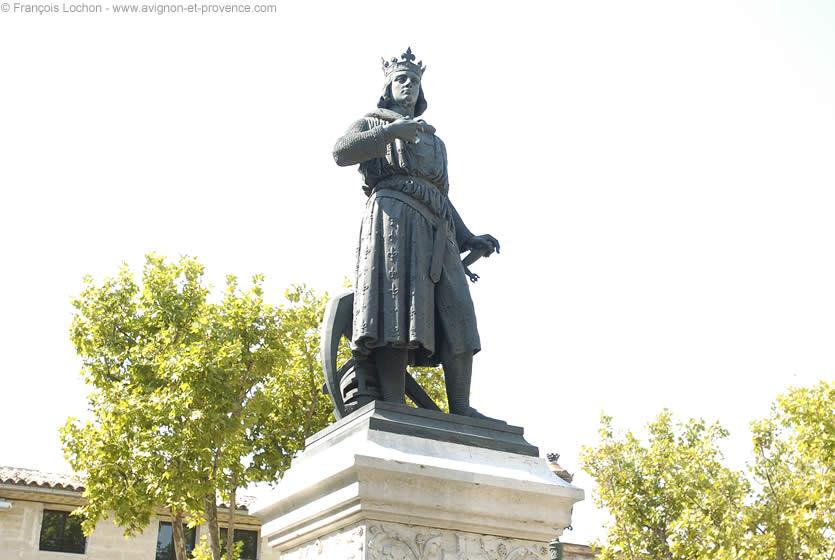
Statue de Saint-Louis
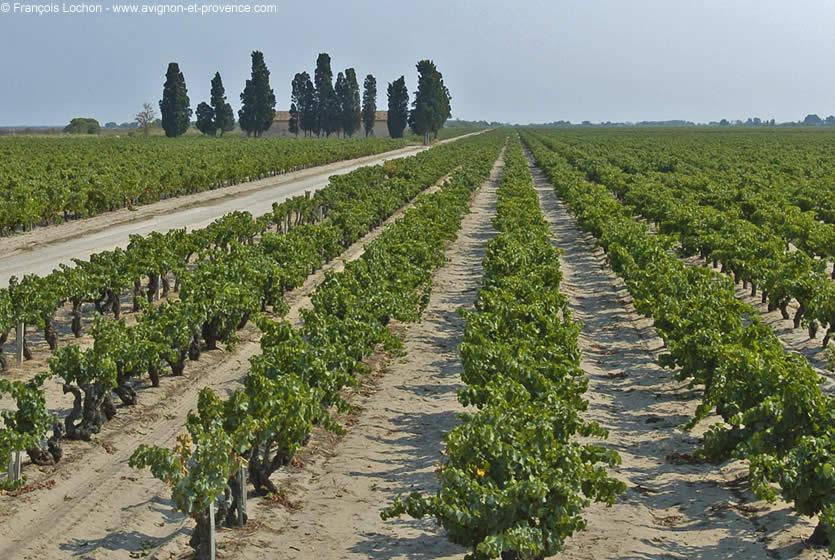
Vin des Sables d'Aigues-Mortes
Les remparts, leurs portes et leurs tours. Les noms qui leur sont attribués sont si évocateurs qu'ils en disent long sur l'histoire de la ville, permettant ainsi d'imaginer aisément l'organisation de celle-ci au XIII éme siècle. Leur construction a débuté sous Louis IX par l'édification de la Tour Constance, donjon tristement célèbre, sur les vestiges de la Tour Matafère, œuvre de Charlemagne.
La Tour Carbonnière, en plein marais et non loin de la commune de Saint-Laurent d'Aigouze, représentait l'avant-garde de l'enceinte, pour protéger la cité de toute invasion par voie terrestre. On peut toujours la visiter.
Les Pénitents Gris et les Pénitents Blancs. Ces deux confréries religieuses issues du Moyen-âge ont marqué leur présence à Aigues-Mortes par l'établissement de deux chapelles. La Chapelle des Pénitents Gris se distingue, outre son bâti, par le retacle en stuc de jean Sabatier réalisé en 1688. Quant à la chapelle des Pénitents Blancs, elle abrite une magnifique fresque monumentale représentant le Saint-esprit et peinte au début du 19 ème par Xavier Sigalon, mais également les quatre œuvres du peintre Auguste Glaise réalisées en 1846 et retraçant le cycle de la vie de la Vierge Marie.
L'Eglise de Notre Dame des Sablons, édifiée en une nef unique de style gothique au XIII ème siècle fut étendue à trois nefs au XVIIIème. C'est sûrement le monument le plus ancien d'Aigues-Mortes. Un patrimoine historique qui fait bon ménage avec ses vitraux contemporains réalisés par l'artiste Viallat.
La compagnie des salins du Midi étale sur le front sud de l'enceinte ses tables de sel, ses cristallisoirs et ses aires de stockage. Durant l'été, l'Office de Tourisme de la ville organise des visites. Pour préserver le calme, les touristes s'y déplacent en véhicule électrique et en VTT.
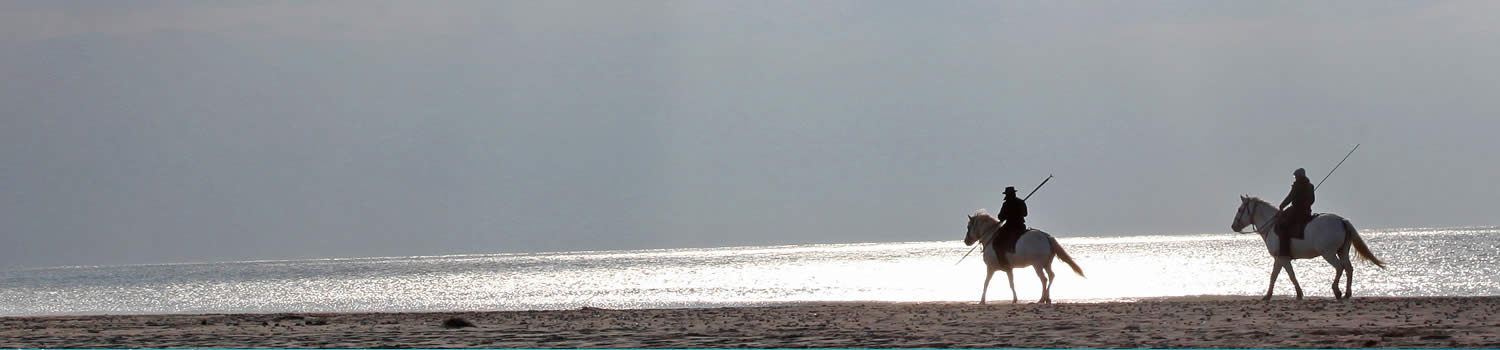
Pour les amoureux de la nature, l'environnement d'Aigues-Mortes peut se découvrir à cheval, en bateau ou en canoe, à pied et en 4x4, et même en tracteur !
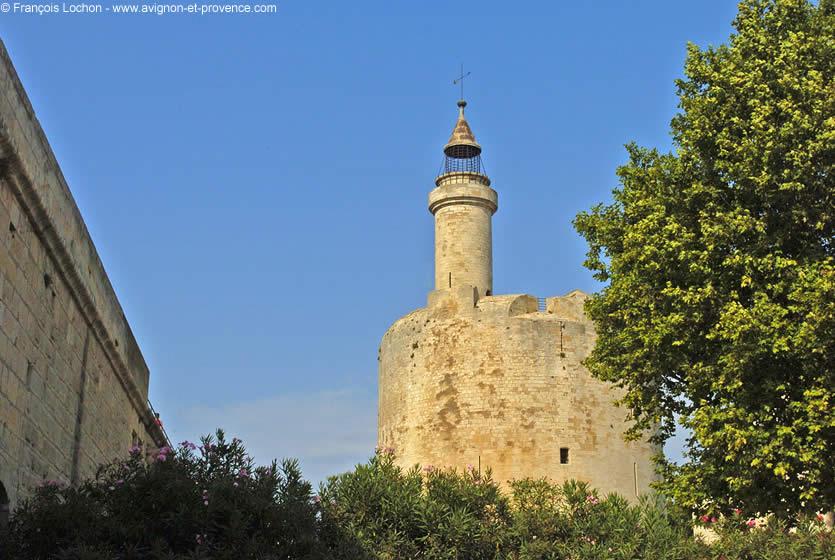
La Tour Constance à Aigues-Mortes
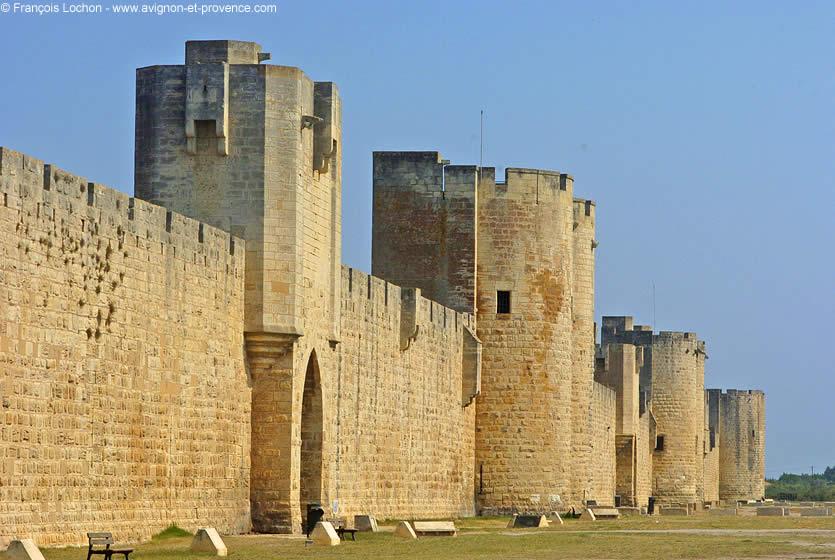
Tours des remparts d'Aigues Mortes
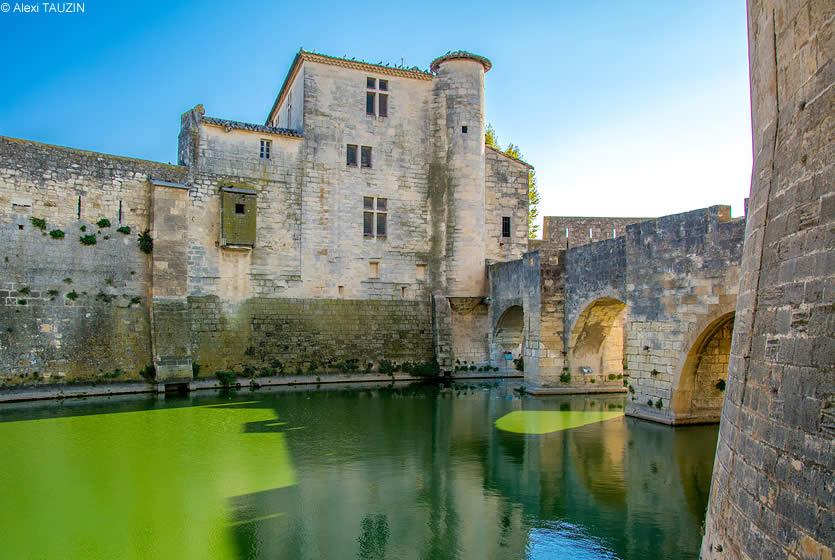
Douves et pont en pierre menant à la Tour Constance
Aussi loin que l'on puisse remonter dans les indices historiques d'Aigues-Mortes, la ville aurait été établie par Marius Caius aux environs de 102 avant J.C. Il faut attendre l'année 791 pour que, sous l'impulsion de Charlemagne, une première tour, la Tour Matafére, y soit installée dans ce petit hameau entouré de marais et où vivotent pêcheurs et sauniers. Ce bâtiment, ouvrant l'œil sur l'Orient et à vocation guerrière, fut très vite légué à l'Abbaye des Bénédictins.
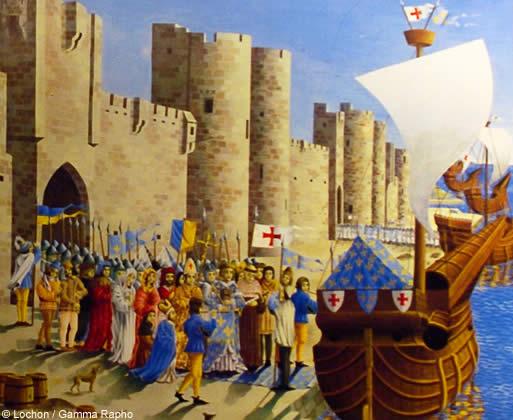
Au XIII ème siècle, le roi Louis IX qui cherche un port ouvert sur la Méditerranée pour lancer ses croisades, se fixe sur Aigues-Mortes. Dès lors la ville se construit autour du projet. Les marais insalubres sont traversés par une voie terrestre endiguée et la population s'accroît. Les tours naissent comme des champignons pour protéger la cité.
C'est en 1272 que le roi Saint-Louis entreprend la construction des remparts de la ville, soit une enceinte de 1640 m de périmètre qui cercle encore Aigues-Mortes aujourd'hui.
A la fin du XVIè siècle, les guerres de religion commencent à sévir en France, elles touchent également la cité. Entre l'implantation du calvinisme qui engendrera, dans cette région, des affrontements durant deux siècles et la défense des salins, la ville aux "Eaux Mortes" bataille contre les tumultes de l'histoire. La Tour Constance devient une prison redoutée par les "prédicants" et les "inspirées" lors de l'abolition de l'Edit de Nantes en 1685, et ce jusqu'en 1767.
La Révolution Française, plutôt bien accueillie par Aigues-Mortes ne tarde pas à plonger ses habitants dans des conflits politiques passionnels entraînant un régime gouvernant par la terreur et la dénonciation et qui réfute la liberté du culte. En même temps, les exhalaisons des marais provoquent de graves épidémies.
Des périodes sombres que le XIXè siècle s'efforce d'apaiser pour reconnaître, dès le début du XXè, Aigues-Mortes comme une station touristique renommée. Anoblie par la maîtrise de son activité saline, son patrimoine - classé monument historique - inspire aujourd'hui, un atout charme et douceur de vivre dans ce petit coin de Camargue, en bordure de Méditerranée.
Art de vivre
Recettes provençales, marchés de provence, traditions de Noel, savoir-faire...