
City of water springs, city of Art, Aix en Provence marvelously exemplifies the Provençal art of living so admired by the rest of the world.
Cezanne made it his city, and the surrounding countryside inspired some of his greatest impressionist masterpieces.
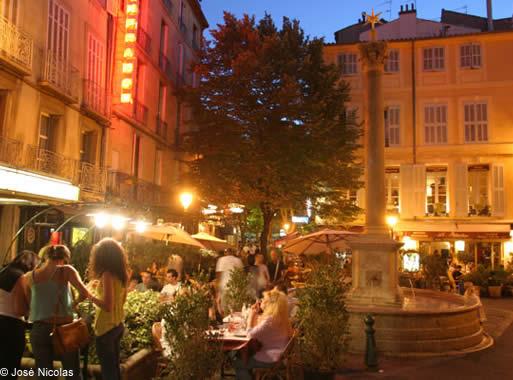
The boulevards shaded by majestic sycamores, the streets bordered by rich private residences, the discreet squares ornamented with beautiful fountains and garnished with welcoming sidewalk coffee, Aix inevitably seduces those who take the time to linger.
As you walk about the famous Cours Mirabeau, shaded by an archway of sycamores, you can admire private mansions and public monuments - the Town Hall, the former Archbishops' Palace, Saint Sauveur Cathedral, the Vendome Pavilion. Squares, ornament by fountains, are also enchanting spots to discover as you stroll along.
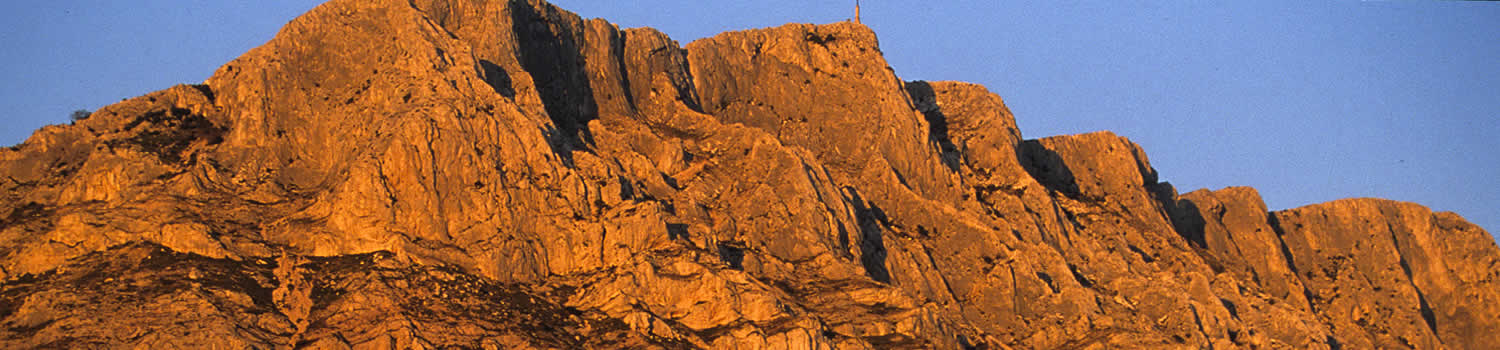
Aix enjoys an exceptional geographic location and the picturesque charm of the surrounding villages will pleasantly surprise you, as well its magnificent landscape immortalized by painters such as Cezanne, Picasso and Kandinsky. You can't miss spotting the sharp summits of the Sainte-Victoire mountain, paradise for hikers and climbers. In the heart of a nature reserve, from its summit you can behold a magnificent panoramic view of the whole region.
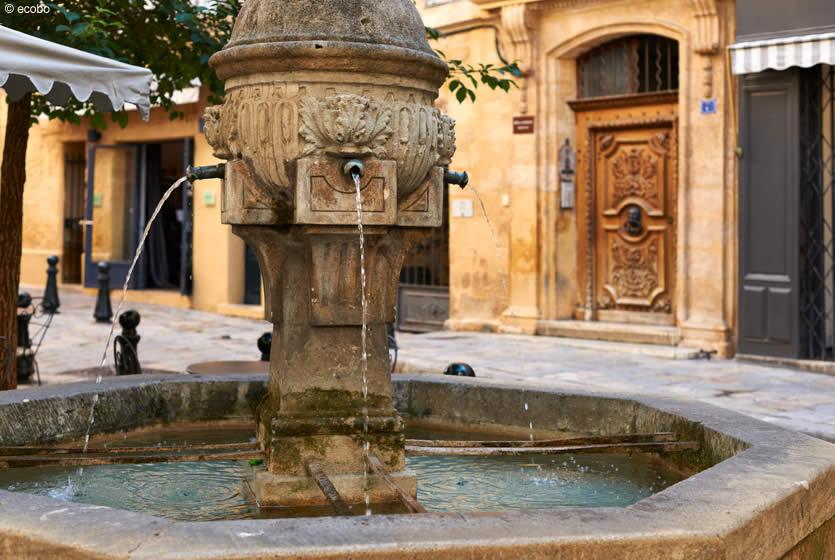
Fountains and private mansions
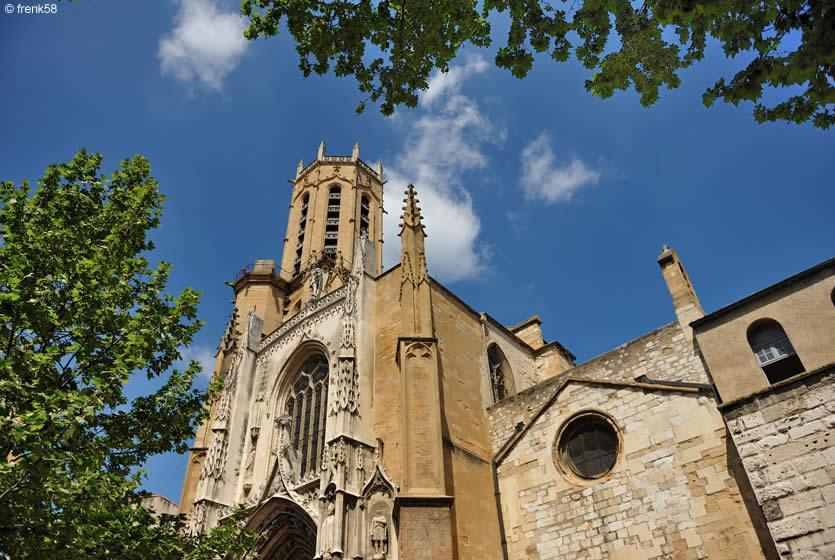
Saint-Sauveur Cathedral
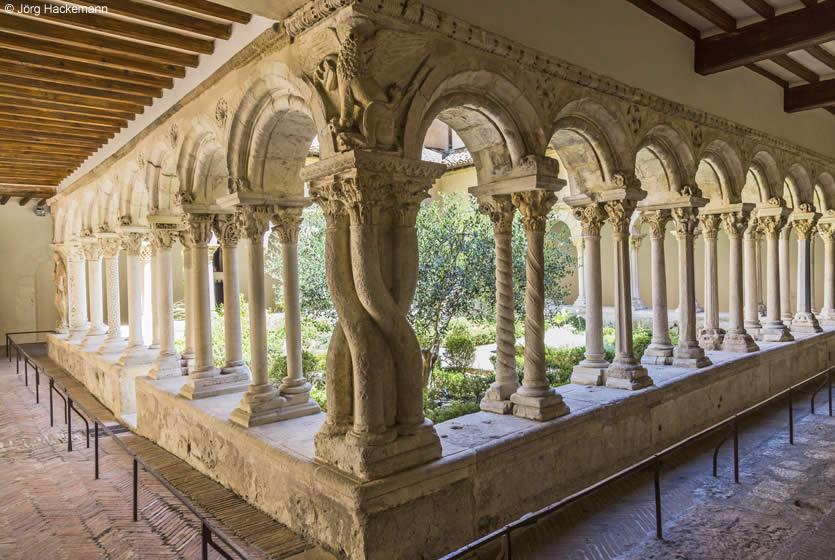
The cloister in the Cathedral of Aix
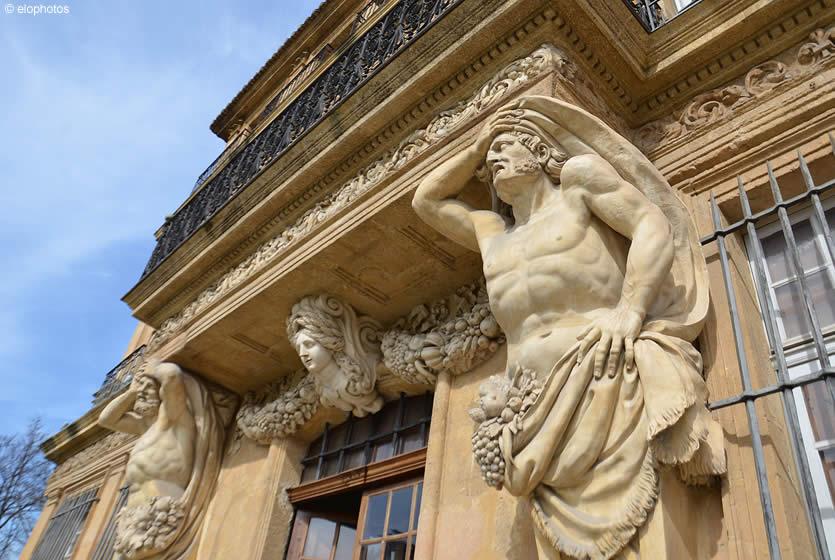
The twin figures of Atlantis, Pavillon Vendome in Aix
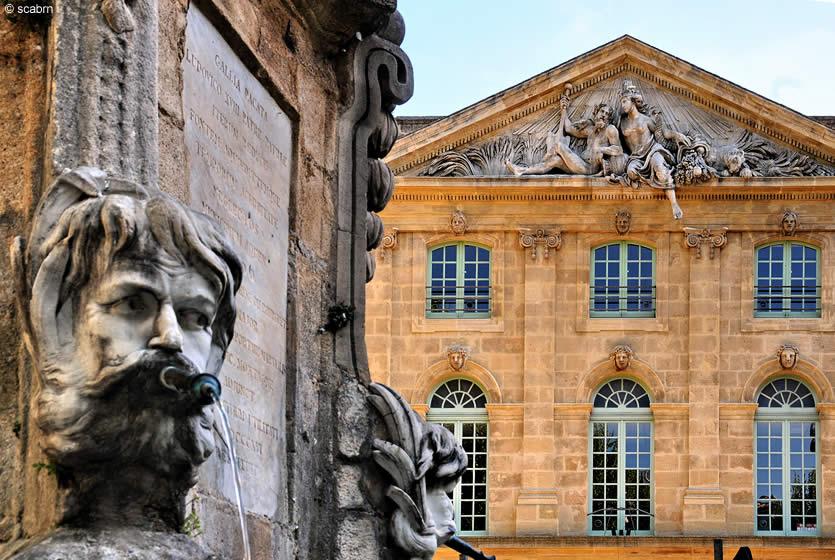
The grain market in Aix
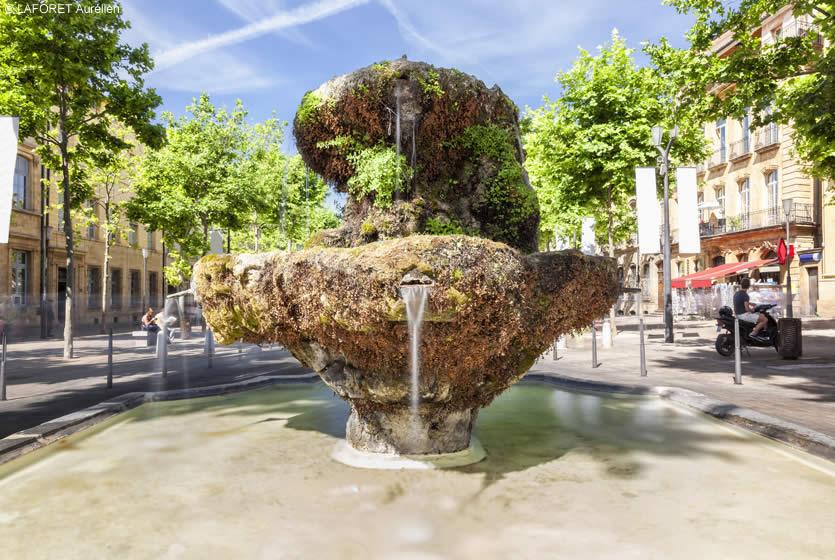
Fountain of the Nine Canon, cours Mirabeau in Aix
The city possesses a rich historic and architectural heritage, which you will never get tired of admiring as you stroll its streets, and also many museums, the cultural gems of Aix:
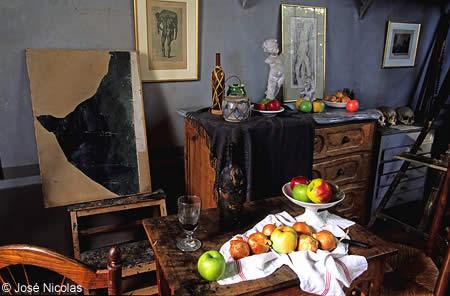
Is it possible to talk about Aix without talking about Cezanne ? This child of Aix has made people admire the landscape around Aix in museums around world. You can visit his studio and garden which have been completely restored and where he painted some of his greatest masterpieces.
The Caumont Art Centre is a veritable cultural institution devoted to the Fine Arts. It is set up in the former Hôtel de Caumont mansion, a remarkable 17th century building.
The Archbishops' Palace
Adjoining to the St Sauveur Cathedral, the former palace of the archbishops of Aix en Provence houses the Tapestry Museum on an upper floor, and during the month of July, the principal events of the Festival of Song.
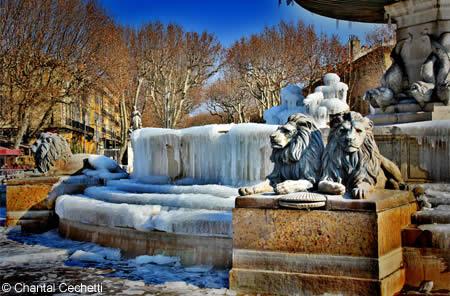
The Cours Mirabeau and the Rotonde Fountain.
On the General de Gaulle Square, it is at the crossroads of several avenues and signals the beginning of the Cours Mirabeau. Built in 1860, this large fountain (32 m in diameter and 12 m high) has a cast-iron basin. The basin is decorated with angels astride dolphins, lions and swans. Three statues symbolizing Justice, Agriculture and the Fine Arts surmont the fountain. The statue representing Justice, sculpted by Ramus, faces the Cours Mirabeau, that of Agriculture, sculpted by Chabaud, faces in the direction of Marseille and that of Fine Arts faces in the direction of Avignon.
The immense Granet Museum treats your eyes to more than 12,000 works and masterpieces with its collections of 17th to 21st century paintings from the French School, 10 paintings by Cézanne, the “child of the land”, the Meyer donation of a sumptuous collection devoted to the European masters of 20th century modern art "from Cézanne to Giacometti", a sculpture gallery and rooms devoted to archaeology, the Celto-Ligurian civilisation in particular.
The Pavillon Vendôme with its magnificent French-style gardens is a folly inherited from the Grand Siècle and which had been the meeting place for the two lovers, the Duke de Vendôme and La Belle du Canet. In addition to a beautiful collection of portraits and furnishings, the museum presents contemporary and modern art exhibitions.
The Joseph Sec Mausoleum
At the end of the 18th century, Joseph Sec had constructed this revolutionary architectural monument. To see : the pavilion, the mausoleum around the enclosed garden and the sculpted facade.
At the entrance to Aix, you will find the Vasarely Foundation, founded by the unequaled master of geometric abstract, inventor of optical art, who wanted to reconcile modern art with architecture and urbanism.
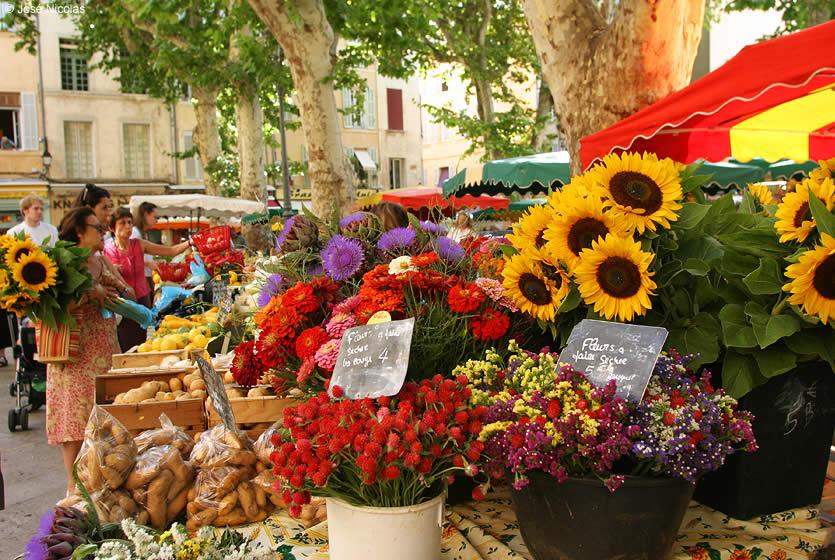
Farmers market in Aix en Provence
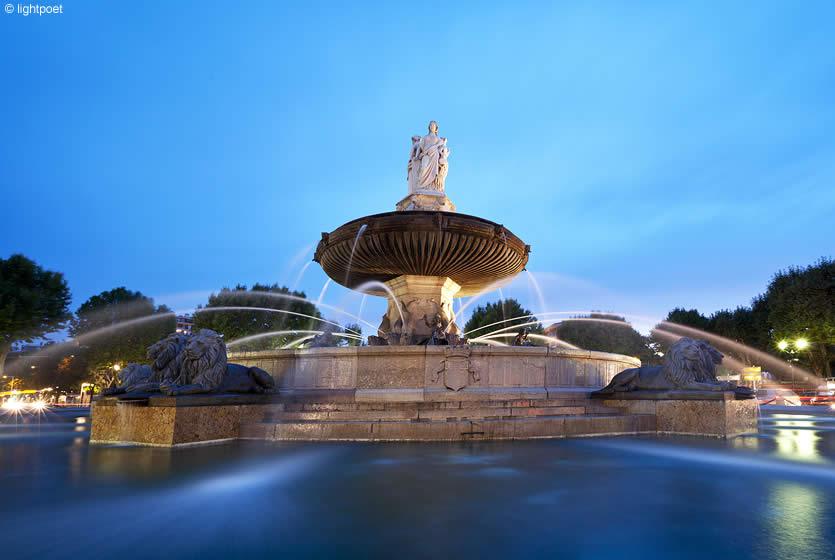
La Rotonde Fountain in Aix
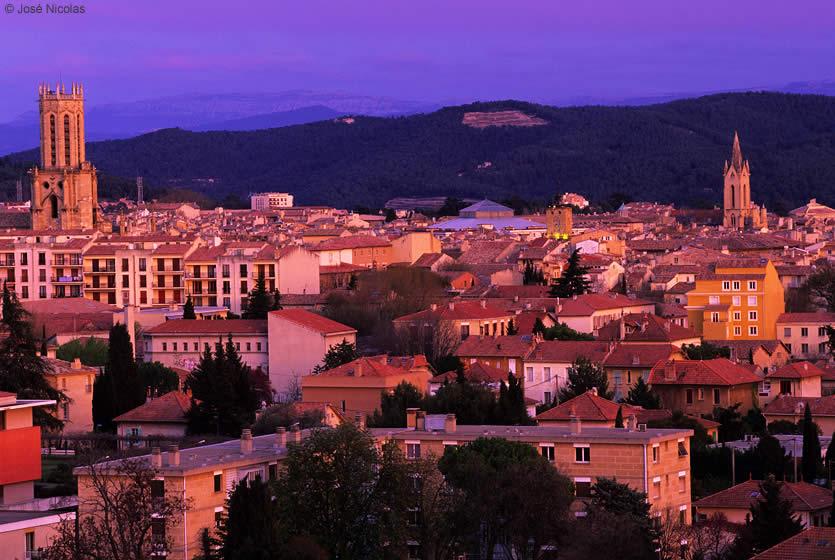
Aix en Provence, panoramic view
A cultural city, many festivals liven up Aix throughout the year, spreading its fame well beyond just Provence: Aix in Music, the International Opera Festival every year in July, the Comic Strips Festival, the International Festival "Les Nuits Pianistiques", Aix Jazz Festival, Dance in Aix, Saison d'Aix world music festival, "Tous Courts" international festival of short films...
Aix is also a land of gastronomy, honoured at the city's markets. Every day of the year, it's possible to stock up on the flavours:
- Local farmers: every day beneath the sycamores on the Place Richelme
- Big markets: 3 times a week – Tuesday, Thursday and Saturday mornings – on the Place des Prêcheurs, Place de la Madeleine and in the Encagnane and Jas de Bouffan neighbourhoods.
- Flower market: Tuesday, Thursday and Saturday across from the Town Hall.
To discover the area around Aix, the circuit "In the footsteps of Cézanne" leads you to the Carrières de Bibémus quarries, the Jas de Bouffan, the Sainte-Victoire Mountain of course, the Château du Tholonet, the Zola dam and the town of Gardanne where the artist lived for one year.
In La Roque d'Anthéron, famous for its international piano festival, don't skip a visit to the Silvacane Abbey, a pearl of Cistercian art. Horse lovers will want to stop at the Lipizzaner horse farm of the Haras des Lauves.
In Ventabren, a charming village in the region of Aix, you can admire the Roquefavour aqueduct, the biggest stone aqueduct in the world.
Art of living
Gastronomy, markets of Provence, regional products, Christmas traditions, celebrities of Provence....