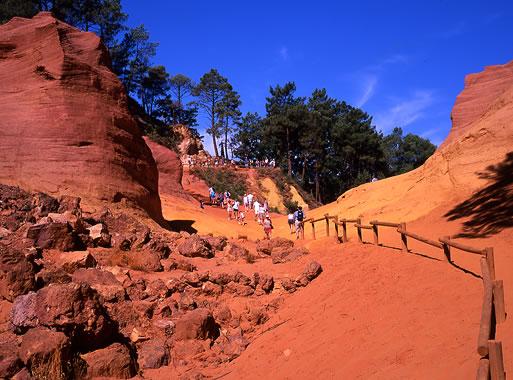
The ochre of the Luberon fascinates. From Roussillon to Gignac, by way of Villars, Gargas and Rustrel, the former ochre quarries of the Apt valley (Vaucluse) surge from the past, hiking trails have been blazed, panoramic viewpoints opened up, signs of bygone days brought up to date and car parks can be found.
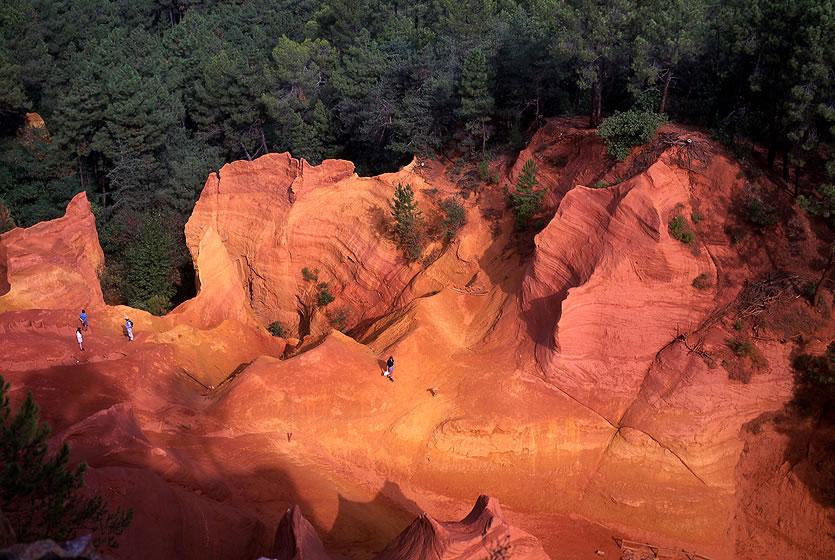
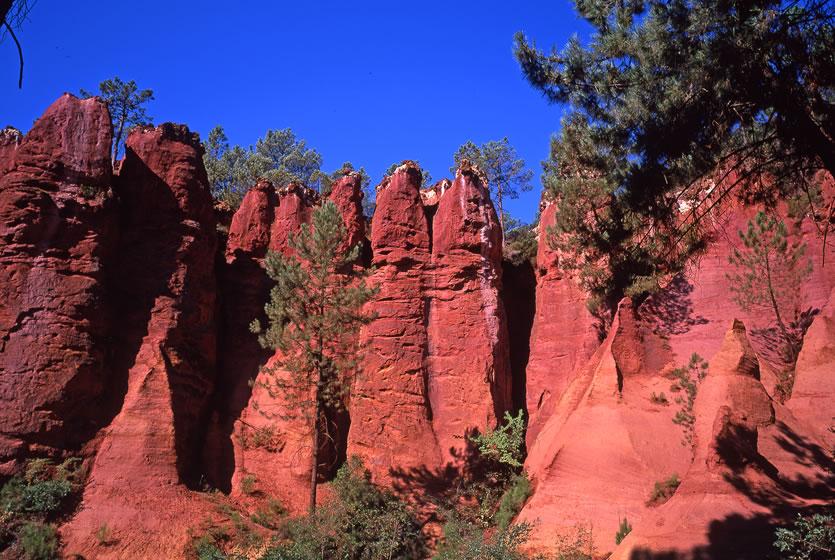
Sculpted by storms, these former ochre deposits today present an enchanting scenery hybridized the intentions of Man and the wishes of Nature. Cliffs, earth pillars, ochre-coloured sand hillocks, after being dug out by shovels and picks, are henceforth shaped by the will of the winds and rain.
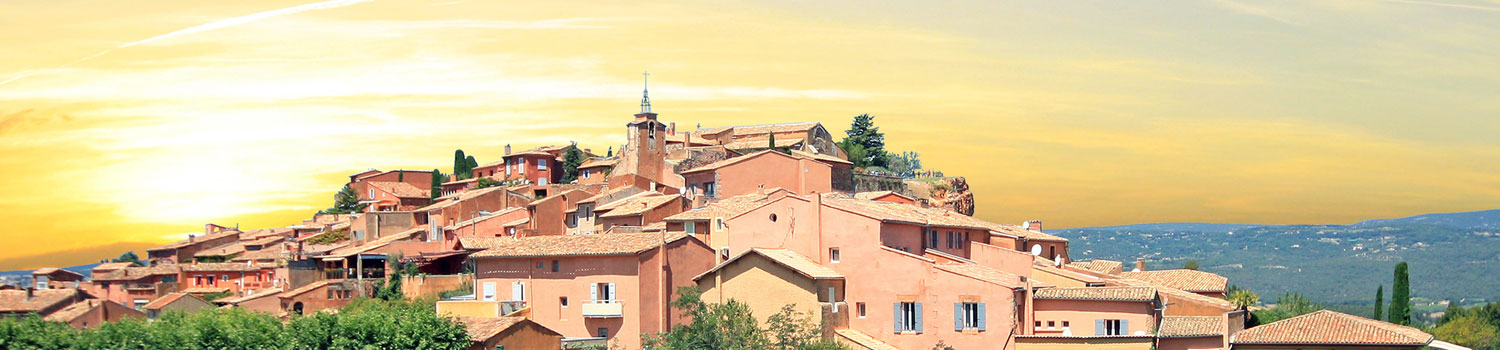
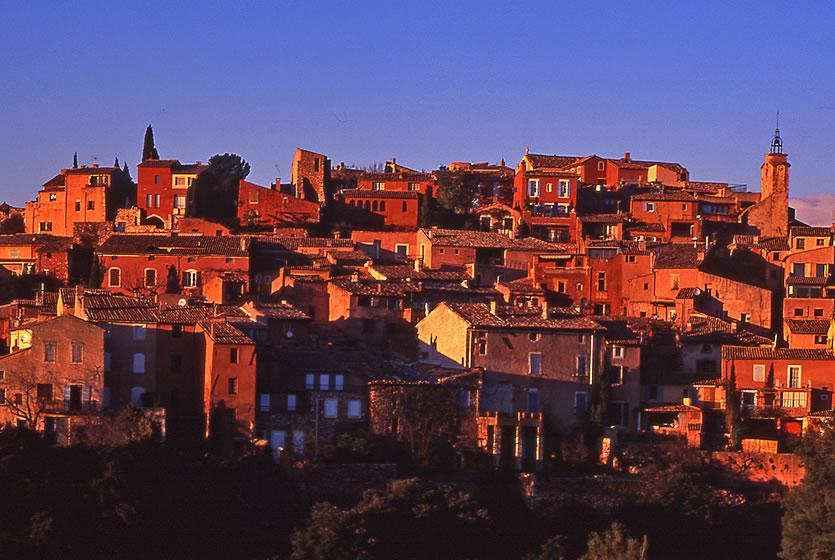
Proudly perched on a hilltop, Roussillon overlooks the first quarries carved out over two centuries ago. The red of the cliff faces, to which respond like an echo the red of the buildings' façades, certainly explains the attraction of this village which is the only one located in the heart itself of the ochre deposits.
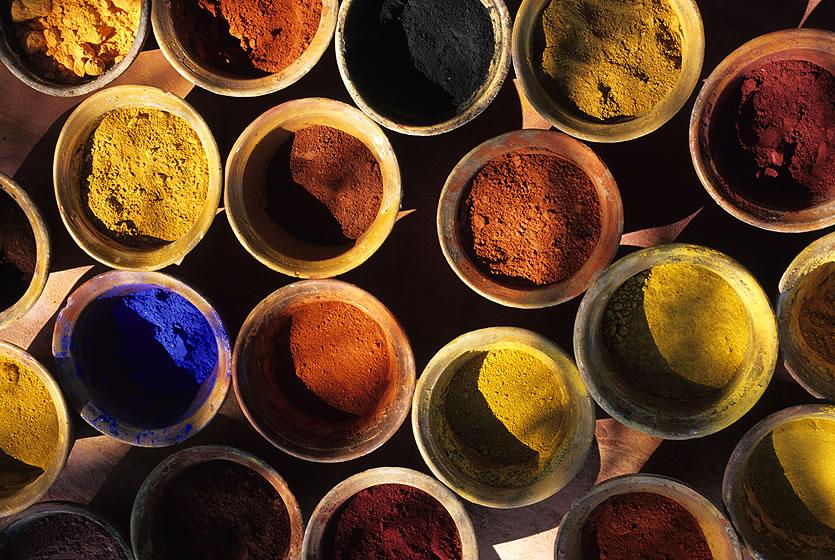
These natural pigments have been used since prehistoric times and we can see evidence of that on the walls of caves. Then in 1780, Jean Etienne Astier from the village of Roussillon discovered that, after processing, ochre became an inalterable and non-toxic dye.
He became the first ochre extractor in France and in the 19th century the exploitation of the mineral deposits became industrial. In the Vaucluse, the open-pit quarries and the exceptional thickness of the lodes (up 15 metres) made extraction very easy and production reached impressive figures: a record of 40,000 tons was set in 1929.
The pigment is used in the making of stucco for the Provençal houses, because it is heat and sun resistant, but also as a component, sometimes unexpected, of certain products: cheese rinds, linoleum, kraft paper, cardboard, ceramic, rubber and cosmetics.
The 1929 economic crisis and the development of synthetic dyes would toll the knell for industrial production of the pigment. Traditional production declined more slowly and is residual today.
The old ochre factory, or Mathieu factory, lying for a long time in a state of a industrial wasteland, can today be visited. The Ochre Conservatory there will help you discover the ochre heritage in all its forms and through different means: exhibitions, resource centre, library, courses, guided tours and educational tours... something for everyone!
Georges Guende, who has studied the flora of the Luberon Natural Regional Park for nearly twenty years, has brought to light the specificity of the flora found in the ochre mountains.
If holm oak, white oak, Scotch pines, rosemary, thyme and boxwood grow indifferently in chalky or siliceous soil, there are other plants which are characteristic of ochre earth. Parasol pines have invaded these areas, following the deforestation that accompanied the opening of the quarries. More rare, the chestnut tree flourishes in the coolness at the bottom of the valleys. The undergrowth is made up of broom heather, which we used in olden days to make brooms, and the common heather produces, in Autumn, long, magnificent bunches of bright pink flowers in the form of small bells. In an open field, the heather takes over the soil, forming a dense tangle of shrub. Testifying to the air's purity but also the ambient humidity, the lichens attach themselves to the bark of trees on the most eastern hills. The aesthetes will particularly like the diversity of wild orchids; some twenty six varieties thrive here, some of them extremely rare. Nature lovers will be keen to admire and photograph them, without touching. The large number of visitors to these areas does, in effect, put these plants in danger of dying off.
Office de Tourisme - Place de la Poste - 84220 Roussillon
+33 (0)4 90 05 60 25
http://otroussillon.pagesperso-orange.fr/Where to sleep?