
An old fortified city, Aigues-Mortes, in the Gard, represents a prestigious heritage right in the midst of marshlands, in one of the most beautiful spots of Provence, the Camargue. A rough diamond in a jewelry box of uncut gems that time has gradually polished to reveal the magnificence of their sparkle.
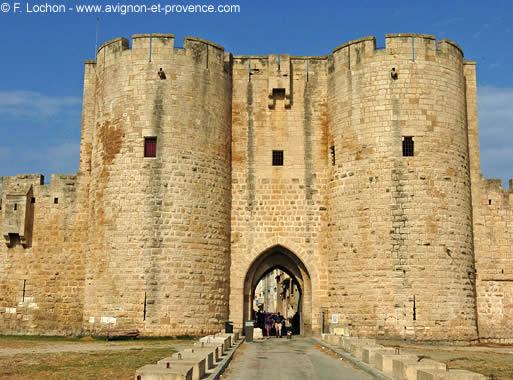
Established to the west of the Little Rhône, the medieval city had originally been a small hamlet of fishermen and salt gatherers, washed by marshes reaching to the Mediterranean Sea, in an almost malarial climate. History encircled the town with 1640 m² quadrilateral city walls, comprising six prestigious towers, including the famous Constance Tower, and ten gates, thus housing an astounding religius heritage.
A city marked by the crusades and the Templar Knights, it is today a tourist site where you can make a pleasant excursion into its past, its bullfighting culture , its gastronomy, its wine and its environment.
The city of "Eaux Mortes" (Dead Waters) harbors other prides and joy. For example, it's little marina, joined to the sea by the Grau du Roi, and to Sète by the Canal du Rhône. It was constructed in the 13th century according to the plans of Louis IX who wanted to establish on the Méditerranean a passage to the Middle East for his crusades.
To the south of the town, the vast flooded lands are home to an exceptional flora and fauna, as well as the principal economic resource of Aigues-Mortes: salt.
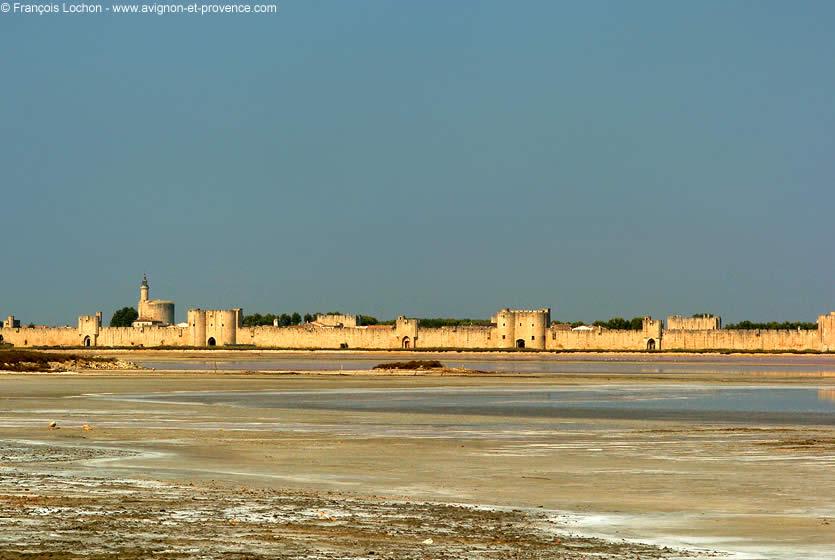
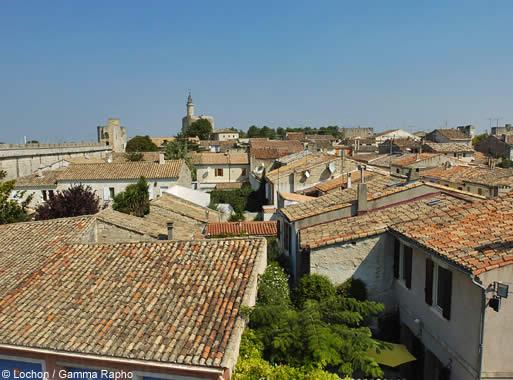
The Citadel of Aigues-Mortes in Camargue
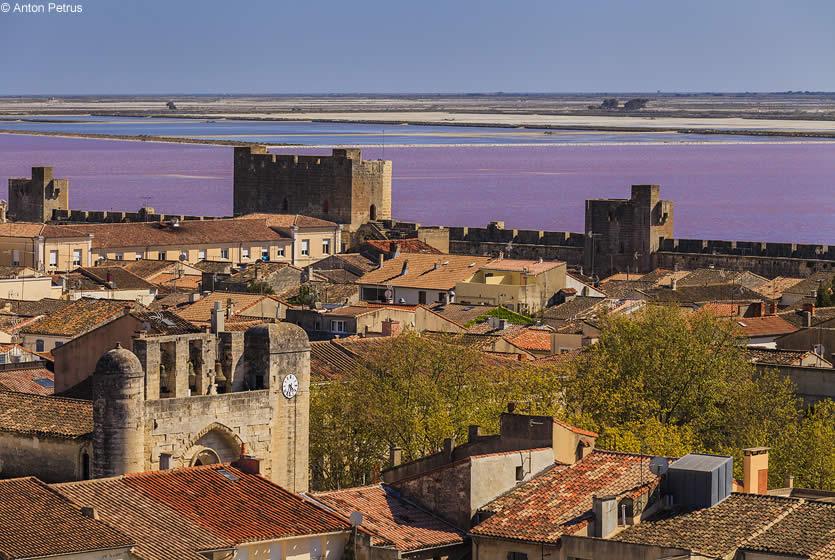
Medieval town of Aigues-Mortes and salt marshes
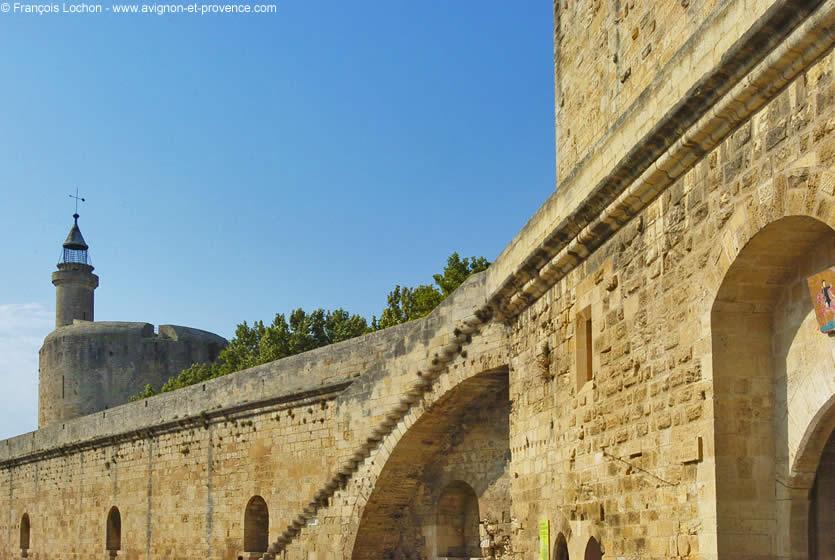
City walls of Aigues Mortes and Constance Tower
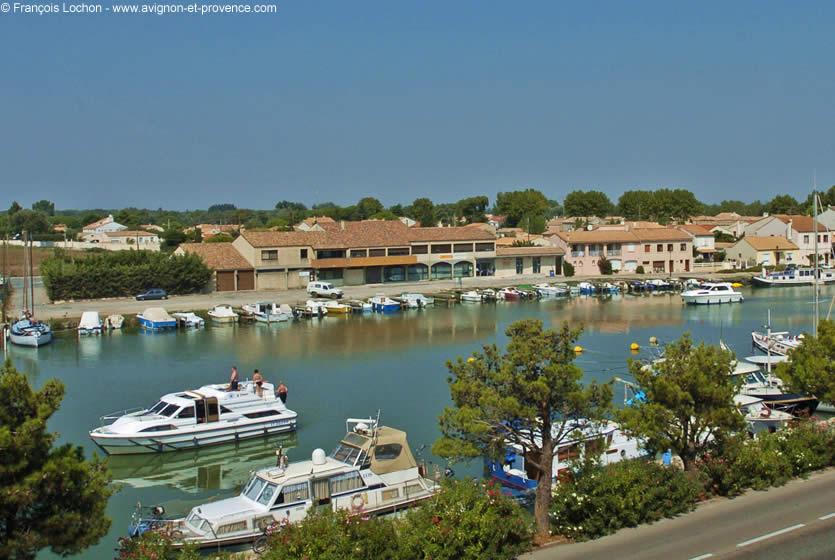
The Marina of Aigues-Mortes
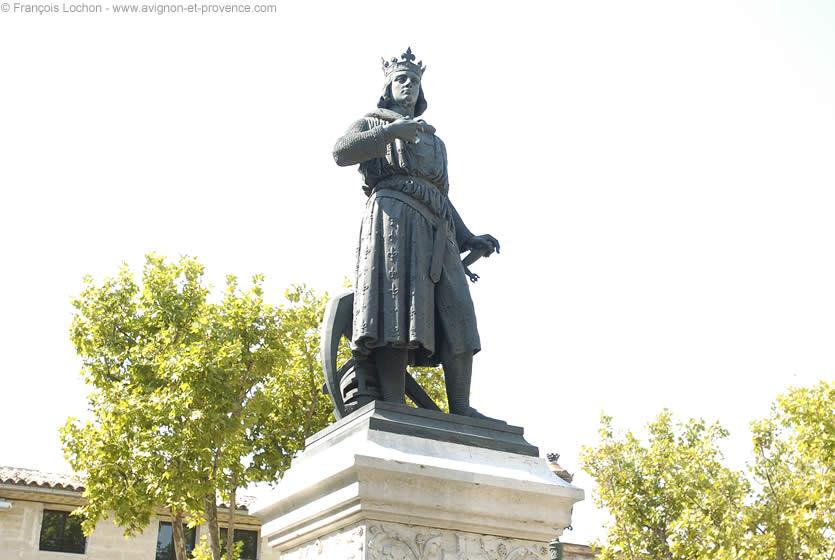
Statue of Saint-Louis
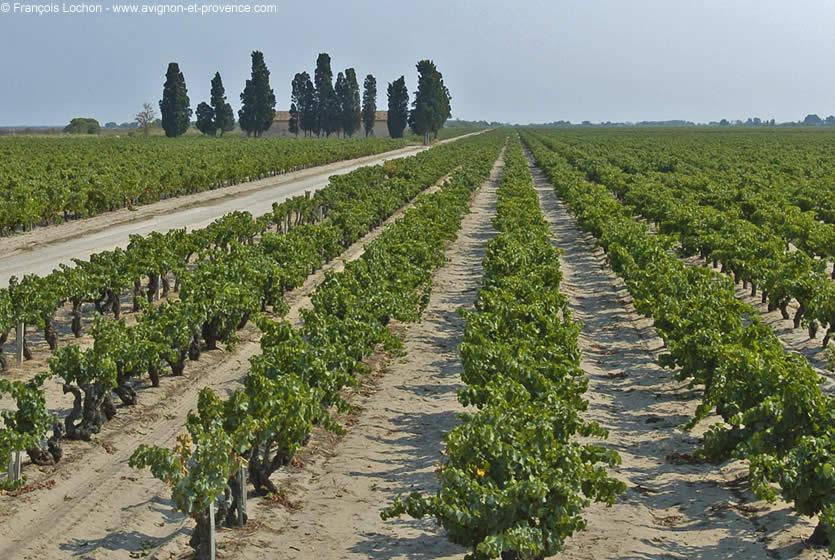
Wine sands of Aigues-Mortes
- The city walls, their gates and towers. The names given tothem are so evocative that they say so much about the history of the town, thus permitting you to easily imagine the organization of the town in the 13th century. Their construction started under Louis IX with the building of the Constance Tower, a sadly notorious keep built on the ruins of the Matafère Tower, a work of Charlemagne.
- The Carbonnière Tower, right in the marshes and not far from the commune of Saint-Laurent d'Aigouze, represented the vanguard of the enclosure, protecting the city from any invasion over land. It can still be visited.
- The Grey Penitents and the White Penitents. These two religious brotherhoods dating from the Middle Ages marked their presence in Aigues-Mortes with the establishment of two chapels. The Chapelle des Pénitents Gris (Grey) distinguishes itself, aside from its frame, by its stucco altarpiece created by Jean Sabatier in 1688. As to the Chapelle des Pénitents Blancs (White), it houses a magnificenet and monumental fresco depicting the Holy Spirit painted at the beginning of the 19th century by Xavier Sigalon, as well as four works by the painter Auguste Glaise, done in 1846, recounting the life of the Virgin Mary.
- The Church of Notre Dame des Sablons, built as one sole nave in a gothic style in the 13th century, it was extended to three naves in the 18th century. It is certainly the oldest monument inAigues-Mortes. A historic building that goes well with the contemporary stained glass from the hand of the artist Viallat.
- The Salins du Midi company displays, along the southern face of the city walls, its salt tables, crystalizing dishes and storage areas. In summer, the town's Tourist Office de Tourisme organises visits.
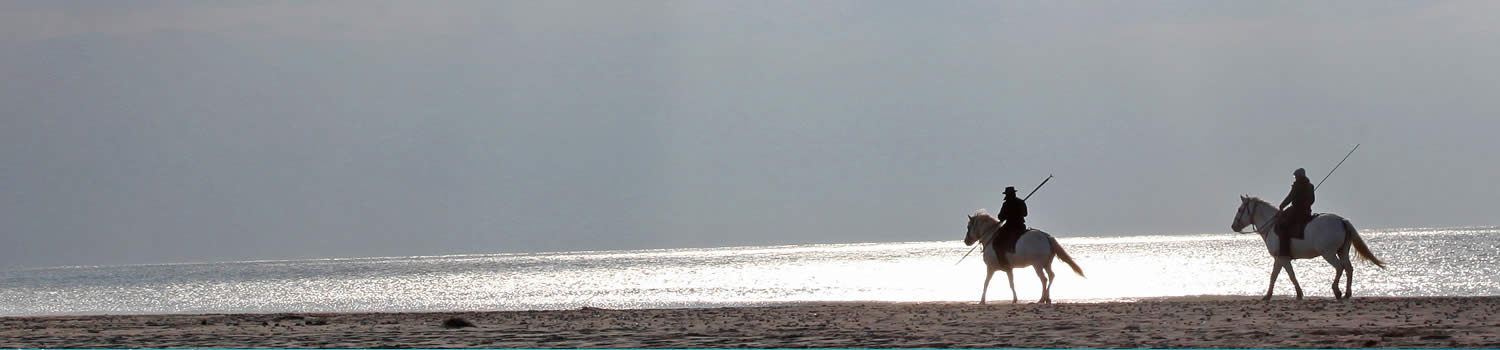
- For Nature Lovers, the area surrounding Aigues-Mortes can be discovered on horseback, by boat, on foot or jeep.
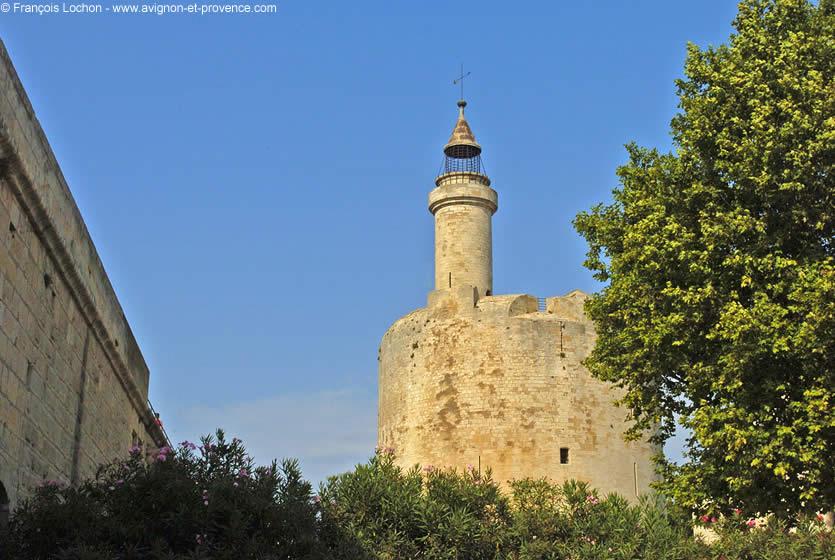
Constance Tower in Aigues-Mortes
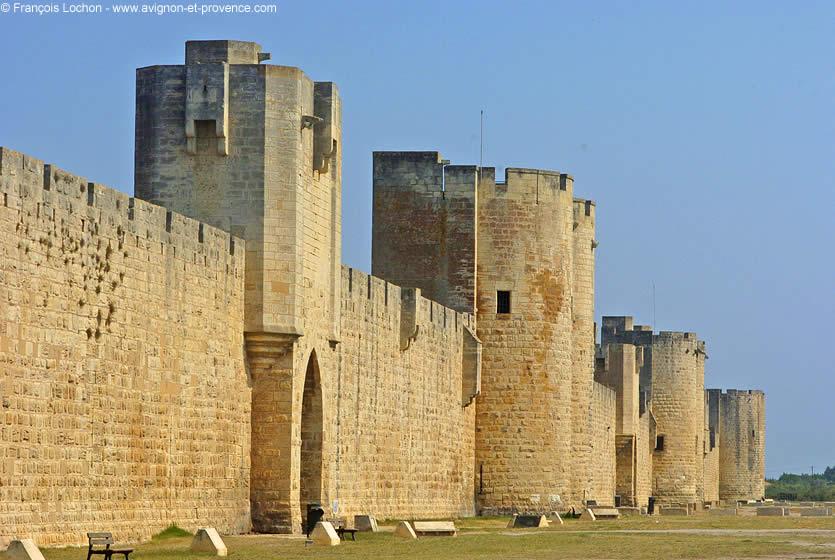
Towers of the city walls of Aigues-Mortes
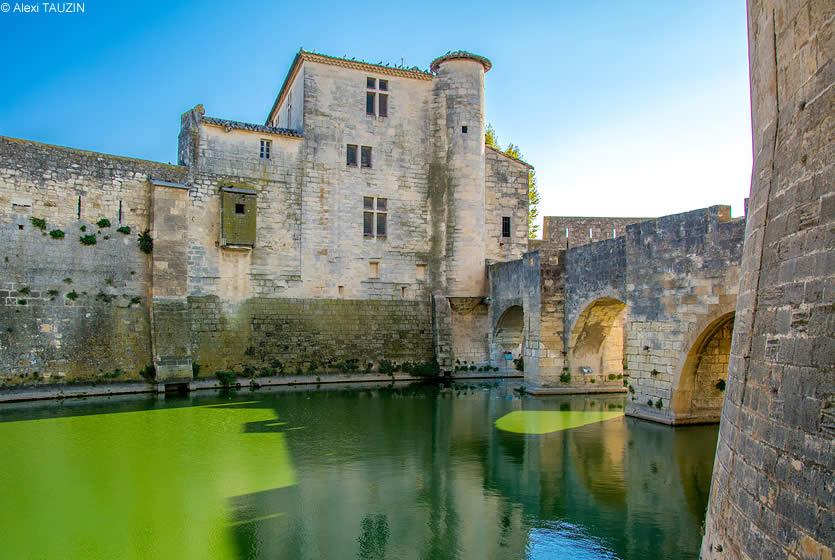
Ancient Stone Bridge Crossing The Moat Of Constance Tower
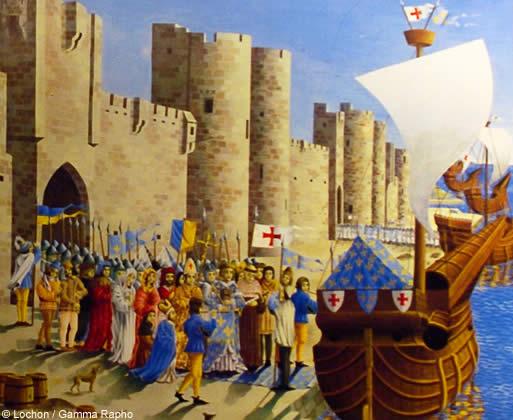
As far back as we can go following the historic tracks of Aigues-Mortes, the town would have been founded by Marius Caius 102 BC. But it's not until 791 when, under the impetus of Charlemagne, the first tower, the Matafére Tower, was built in this little hamlet surrounded by marshes and where fishermen and salt miners lived hand to mouth. This building, with its eye to the Mid-east and its war aims, was soon handed over to the Benedictine Abbey.
In the 13th century, the king Louis IX, who was looking for a port on the Mediterranean Sea from which to send off his Crusaders, set his sights on Aigues-Mortes. From then on, the town was built up around this project. A dyked up road croosed the insalubrious marshes and the population grew. Towers sprang up like mushrooms after the rain to protect the city.
In 1272 the king Saint-Louis began the construction of the city walls, an enclosure with a 1640m perimeter, which still encircles Aigues-Mortes today.
At the end of the 16th century, the Wars of Religion began to rage in France, affecting this city, as well. Between the introduction of Calvinism which engendered, in this region, many conflicts over two centuries and the constant defense of the saltworks, the city battled against the tumults of history. The Constance Tower became a prison dreaded by the "preachers" and the "inspired" at the time of the abolition of the Edict of Nantes in 1685, and up until 1767.
The French Revolution, mostly welcomed by Aigues-Mortes, is not long in plunging the inhabitants into passionate political conflicts, bringing with it a regime governing through terror and denunciations and refuting the freedom of religion. At the same time, marshes' exhalations provoked serious epidemics.
These were dark periods, which the 19th century worked to appease, to finally, at the start of the 20th century, recognize Aigues-Mortes as a renowned tourist station. Ennobled by the mastery of its saltworks and its heritage - classed as a historic monument - it inspires today a charming and sweet life in this little corner of the Camargue, on the shores of the Mediterranean.
Art of living
Gastronomy, markets of Provence, regional products, Christmas traditions, celebrities of Provence....